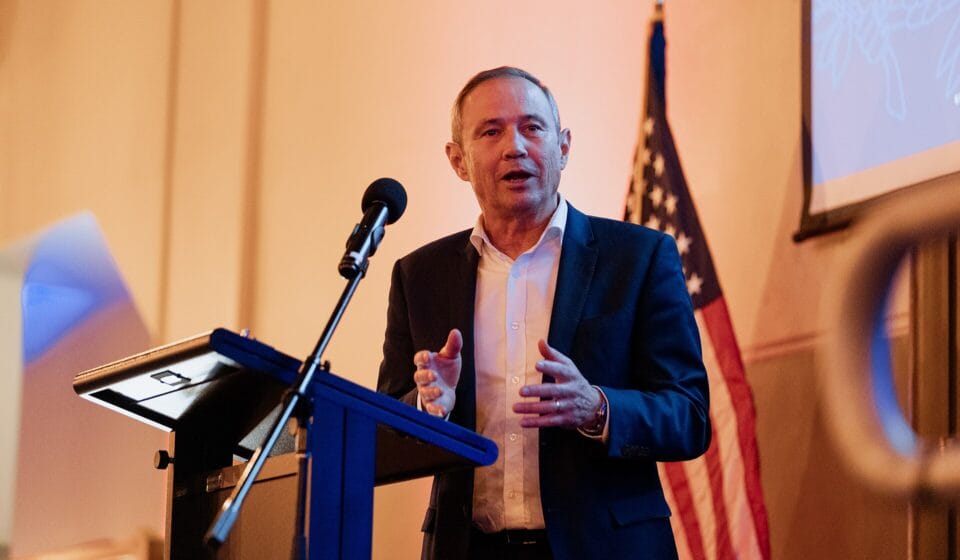
Roger Cook inherited one of the hardest acts in Australian politics to follow. Yet three years later, Western Australia is building new railways, roads, hospitals, housing and energy infrastructure while maintaining comparatively strong finances. He might not have Mark McGowan’s larger-than-life political persona, but perhaps that misses the point. Roger Cook doesn’t look cooked. Increasingly, he looks like he is quietly cooking.
When Roger Cook became Western Australia’s 31st Premier in 2023, he inherited an unusual political problem.
His predecessor, Mark McGowan, had become one of the most dominant political figures WA had seen in decades. Labor held an almost absurd parliamentary majority following its 2021 landslide. Following that was never going to be easy. Cook was unlikely to recreate McGowan’s political persona, and, to his credit, he hasn’t really tried. He is quieter. Less theatrical. Less inclined to turn every disagreement into a political confrontation. At first, that understated approach could easily have been mistaken for weakness. Three years later, it increasingly looks like a different type of leadership. Because while Cook might not generate the same political theatre, an enormous amount is being built around Western Australia.
First, Cook proved he could actually win
The biggest question surrounding Cook was whether Western Australians actually wanted him, rather than simply the Labor government he inherited from McGowan.
The answer came at the March 2025 state election.
Labor retained 46 of the 59 Legislative Assembly seats and recorded an estimated 57.2 per cent statewide two-party-preferred vote. There was a sizeable 12.5-point swing against Labor, but that needs to be understood against the extraordinary 2021 result, when Labor won 53 seats.
In other words, Cook did not recreate McGowan’s once-in-a-generation landslide. He didn’t need to. He secured a huge parliamentary majority of his own and gave WA Labor a third consecutive term. Cook is no longer simply the caretaker of Mark McGowan’s government.
This is now Roger Cook’s government, and Western Australians gave it a substantial mandate of its own.
WA’s economy has given Cook a strong foundation
It would be ridiculous to attribute Western Australia’s economic strength entirely to whichever government happens to occupy Parliament House. WA possesses something most States would covet: enormous quantities of iron ore, gas, lithium, gold and other valuable resources.
Commodity prices matter. Global demand matters. But good economic conditions can still be squandered, and WA’s finances have allowed the Cook Government to pursue something increasingly difficult elsewhere in Australia: significant public investment without abandoning budget discipline.
The October 2025 CommSec State of the States report ranked Western Australia as Australia’s best-performing state or territory economy for the fifth consecutive quarter. More recently, CommBank’s August 2026 wage data showed WA continuing to record the strongest annual wage growth in the country, at 3.6 per cent.
Meanwhile, the 2026–27 WA Budget is funding a vast infrastructure pipeline alongside projected budget surpluses. The more interesting question, therefore, is not simply whether WA has money.
It is:
What is Cook doing with it?
Increasingly, the answer is building things.
Transport might be one of Cook’s most underrated achievements
It is impossible to discuss the Cook Government fairly without talking about public transport.
To be clear, METRONET did not begin with Roger Cook. Much of the program was conceived and commenced under Mark McGowan’s government, with Rita Saffioti playing an enormous role in its delivery. But Cook inherited that enormous construction program and his government has continued to open, expand, and integrate it rather than allowing the momentum to stall.
The scale is substantial:
METRONET has delivered approximately 72 kilometres of new passenger railway and 23 new stations, dramatically reshaping the geography of Perth’s public transport network. The Yanchep extension pushed the Joondalup Line further into Perth’s rapidly growing northern suburbs.
The Morley to Ellenbrook Line finally gave communities in the north-east a railway connection after decades of discussion. Then came perhaps one of the most significant transformations of Perth’s south-east.
In June 2025, the 17-kilometre Thornlie–Cockburn Line opened, creating Perth’s first east-west passenger rail connection between the Armadale and Mandurah lines. At the same time, five rebuilt stations opened along the elevated inner Armadale Line at Carlisle, Oats Street, Queens Park, Cannington and Beckenham. The remaining Armadale Line subsequently reopened alongside the extension to Byford. This is not glamorous government policy written into a strategy document and forgotten.
Western Australians are using public transport in record numbers
One of the strongest pieces of evidence that these investments are changing behaviour arrived just days ago.
On 12 August 2026, the Public Transport Authority announced that Transperth had recorded 161.2 million boardings during the 2025–26 financial year, the highest annual patronage in its history.
That was an increase of 8.4 per cent from the previous year and surpassed the previous record from 2012–13.
Train patronage alone surged 19 per cent to 73.7 million journeys. That is significant. One of the easiest criticisms to make of large public transport projects is that governments spend billions building infrastructure people supposedly will not use.
WA is producing evidence of the opposite. People are using it more than ever and Cook’s government has coupled expanded infrastructure with much cheaper fares. Since January 2026, the Go Anywhere Fare has allowed passengers to travel anywhere across the Transperth network for as little as $2.80 with a SmartRider on Autoload, or $3.50 using contactless payment.
Transwa fares to regional destinations have been permanently cut by 50 per cent. Free Sunday public transport has also been made permanent, alongside free school travel for students using Student SmartRiders. That is simultaneously transport policy, congestion policy, environmental policy and cost-of-living policy. Instead of simply telling people to drive less, the government is making the alternative better and cheaper.
And Cook is not finished with transport
There is another fascinating project coming down the Swan River, quite literally. Five new electric ferries are being designed and built in Henderson as part of the $107 million METRONET on Swan expansion.
New terminals are planned at Applecross and Matilda Bay, alongside upgrades to Elizabeth Quay and Barrack Square. The electric ferry services are expected to begin operating from late 2027.
What makes this especially interesting is that the ferries are being built locally. Approximately 130 workers, including apprentices, are expected to be involved in their construction.
That links transport policy with another part of Cook’s economic agenda: trying to manufacture more things in WA rather than simply digging resources out of the ground and shipping them overseas.
The road network is also receiving major investment. The 2026–27 Budget includes $3.6 billion for regional roads over four years, while the state and federal governments are jointly investing $1.1 billion in Anketell Road infrastructure supporting the future Westport development. This is where Cook’s agenda starts to look less like a collection of unrelated announcements and more like an attempt to prepare Perth and WA for the next few decades of population growth.
Housing remains Cook’s biggest challenge
There is no point pretending everything is going perfectly. Housing is probably the most obvious weakness in Cook’s record. Western Australia’s population has been growing rapidly while housing supply has struggled to keep pace. Rents have risen sharply and buying a home has become harder, particularly for younger Western Australians. The government should be judged on whether it actually improves that situation, not on how many billions of dollars appear in a press release.
But the scale of the response is now significant. The 2026–27 Budget contains $4.7 billion in new housing investment, taking additional housing investment since 2021 above $10.8 billion. That includes social and affordable housing, land development, infrastructure needed to unlock new residential lots and development around METRONET stations.
There is a particularly important connection here between Cook’s housing and transport agendas. The government is putting hundreds of millions of dollars into developing land and activating METRONET station precincts. That is good urban planning. Perth cannot simply continue expanding outward forever while forcing households to own multiple cars and commute enormous distances. More homes near high-capacity railway stations can mean shorter journeys, greater public transport usage and more sustainable neighbourhoods. The challenge now is delivery. Cook ultimately deserves to be judged on how many actually get built.
But perhaps the biggest Cook story is hospitals
If there is one area that may eventually define Roger Cook’s premiership, it is healthcare. That is particularly appropriate because Cook himself served as WA’s Health Minister before becoming Premier. Western Australia’s health system has real problems. Emergency departments face pressure. Ambulance ramping remains politically damaging. Some older hospitals need significant maintenance and modernisation. A positive assessment of Cook should not pretend otherwise. But something very significant is now occurring that can easily be missed amid the day-to-day arguments over ramping statistics:
Western Australia has embarked on a huge expansion of hospital capacity. The 2026–27 Budget contains a $5.5 billion health infrastructure program over four years, including an additional $1.5 billion committed in the latest Budget.
More than 900 additional hospital beds are in the pipeline. And unlike some long-term infrastructure promises, several of these projects are already under construction.
A new Women and Babies Hospital is actually rising out of the ground
The centrepiece is the $1.8 billion New Women and Babies Hospital project. A new tertiary women’s and babies hospital is being built at the Fiona Stanley Hospital precinct in Murdoch, while Osborne Park Hospital is simultaneously undergoing a major expansion of women’s health services.
Construction is underway and the new facilities are expected to be completed in 2029. This is precisely the sort of infrastructure a rapidly growing city needs to think about before the existing system reaches breaking point. Hospitals take years to plan, design, build, equip and staff. Waiting until capacity is exhausted before beginning construction is not planning. Building ahead of future demand is.
Mandurah is getting an entirely new hospital
Perhaps an even better example emerged this month. On 4 August 2026, construction officially commenced on the $950.6 million New Mandurah Hospital. The hospital is being built on vacant land beside the existing Peel Health Campus and is designed to significantly expand capacity for Mandurah and the wider Peel region, one of WA’s fastest-growing areas. Plans include an expanded emergency department, additional inpatient beds, operating theatres, cancer treatment facilities, mental-health services, palliative care and a high-dependency unit.
This is important for more than Mandurah. A decentralised health system where major population centres can provide more sophisticated care locally means fewer patients travelling into Perth and less pressure on tertiary hospitals. That is what infrastructure planning for future growth should look like.
Royal Perth is being transformed too
At the opposite end of the metropolitan area, construction began in June 2026 on a major expansion of Royal Perth Hospital’s emergency department.
The $807.3 million project will deliver a new building with additional emergency and hospital capacity while integrating with existing critical-care services. Royal Perth is one of WA’s most important hospitals, but much of the site reflects infrastructure built for a very different Perth. Modernising it is not optional, as it is overdue, and there are other projects happening simultaneously.
The state is bringing Mount Lawley Hospital into the public system, adding 118 public beds; new capacity is also coming online at Midland and Joondalup.
Regional hospital investment includes Bunbury, Albany, Tom Price, Meekatharra, Geraldton, Laverton, South Hedland and Broome. The Bunbury redevelopment alone has grown into the largest regional hospital infrastructure project undertaken in WA, with total investment reaching about $572 million.
Cook is also thinking beyond the conventional hospital
Another potentially transformative project is the proposed Perkins WA Comprehensive Cancer Centre.
Backed jointly by the WA and federal governments, the proposed centre aims to bring cancer treatment, clinical trials and medical research together within one major facility associated with the QEII medical precinct. That is the sort of investment that can achieve two things at once. It can improve healthcare for Western Australians while also strengthening WA’s medical research and biotechnology sectors. For a state that talks constantly about economic diversification, that matters. WA cannot diversify simply by opening different types of mines. Diversification also means research, advanced medicine, manufacturing, technology and knowledge industries.
There is a legitimate criticism here
Cook should not receive a free pass simply because large amounts of money are being spent. Construction costs have risen. Some projects have changed scope. Older hospitals still need maintenance.Despite enormous population growth in Perth’s north, the 2026–27 Budget did not allocate funding for a new hospital at Yanchep, something local residents have been campaigning for.
The ramping numbers show just how serious that pressure remains. In July 2026, WA ambulances spent 5,924 hours ramped outside hospitals waiting to transfer patients, up from 5,333 hours in June, although the July figure was still lower than in the same month in both 2024 and 2025. That is not a figure the Cook Government can simply wave away: it underlines why the new hospital beds and major expansions now under construction are so important, while also showing that WA needs improvements in patient flow and capacity long before those future hospitals are finished.
That deserves scrutiny. A government with Cook’s parliamentary majority cannot perpetually blame other people when services fall short. But there is an equally important distinction between criticising problems and pretending nothing is happening.
Something very clearly is happening.
WA is simultaneously building or expanding major hospitals at Murdoch, Osborne Park, Royal Perth, Mandurah, Bunbury and elsewhere while preparing hundreds of additional beds across the health system.
The energy transition is another piece of the puzzle
WA also faces an unusually complicated energy transition. This is a state whose prosperity remains deeply connected to mining and energy exports. Pretending that those industries can simply be switched off would be economically reckless. Pretending that the global energy system is not changing would be equally reckless. Cook’s challenge is therefore to move WA toward cleaner energy while using the state’s existing industrial strengths to create the next generation of jobs.
Our energy transition requires considerably more than putting solar panels on houses. It requires transmission lines, batteries, renewable generation and eventually the industrial infrastructure required to electrify more of the economy. The government’s clean-energy investment includes major transmission infrastructure intended to connect new renewable generation to the South West electricity system. That is the boring infrastructure behind the energy transition, but it is also some of the most important. A wind farm is useless if its electricity cannot get where it is needed.
Perhaps Cook’s greatest strength is that he isn’t trying to be McGowan
Australian politics, and politics globally, is becoming increasingly dominated by personalities. Politicians learn that outrage generates attention. Conflict produces clicks. Culture wars produce headlines. Roger Cook rarely seems particularly interested in playing that game. That can make him look less exciting than other politicians. But government itself is not supposed to be entertainment.
A successful Premier should ultimately be judged by whether people have homes, hospitals work, trains arrive, roads connect communities, electricity remains reliable and the next generation inherits functioning infrastructure. Look through that lens and Cook’s government becomes considerably more interesting.
WA now has vastly more railway infrastructure than it did a decade ago. Public transport patronage has reached an all-time record. Public transport has become substantially cheaper. New electric ferries are being built locally.
Billions are going into housing.
A new women’s hospital is under construction. A new Mandurah Hospital is under construction. Royal Perth is undergoing a major expansion. Bunbury’s hospital is being transformed. More than 900 additional hospital beds are planned.
And WA is beginning the expensive job of preparing its electricity network for the energy transition.
None of those things guarantees success, but they are tangible.
So, is Roger cooked?
There are certainly things that could burn. Housing affordability remains difficult. The health system still experiences serious pressure. Infrastructure projects must be controlled carefully so taxpayers receive value for money. WA remains heavily exposed to commodity cycles and China’s appetite for its resources. And a government holding 46 of 59 lower-house seats deserves more scrutiny, not less.
But that is different from saying Cook’s government lacks direction. Increasingly, the direction looks surprisingly coherent.
Build more homes.
Build more hospitals.
Build better transport.
Build the energy grid.
Build more things in Western Australia.
And use today’s resource wealth to prepare WA for the population and economy it will have tomorrow.
Roger Cook might never dominate Australian political culture in the way Mark McGowan once did. Perhaps he does not need to. There is something appealing about a Premier whose legacy may ultimately be measured less by viral press conferences and more by railway stations, hospitals, houses, transmission lines and infrastructure.
The real test will come over the next few years.
Do the homes actually get built?
Do those 900 hospital beds open?
Does the investment reduce pressure on emergency departments?
Does WA’s public transport boom continue?
Can the state diversify while maintaining the industries that currently pay its bills?
Those are fair questions, and Cook should be held accountable for the answers. But looking at Western Australia in August 2026, the suggestion that Roger Cook is simply presiding over the slow decline of the McGowan era looks increasingly difficult to sustain. He inherited an extraordinary political legacy. Now he is starting to construct one of his own.
So, is Roger cooked?
I’ll let you be the judge.
References
- Parliament of Western Australia, Western Australian State Election 2025: Analysis of Results — election results, including Labor’s 46 lower-house seats and estimated 57.2% two-party-preferred vote. https://www.parliament.wa.gov.au/WebCMS/webcms.nsf/resources/file-electionresults2025/$file/Western%20Australian%20State%20Election%202025%20Analysis%20of%20Results%20FINAL.pdf
- CommSec, State of the States, October 2025 — ranked Western Australia as Australia’s best-performing state economy. https://www.commbank.com.au/articles/newsroom/2025/10/state-of-the-states.html
- Government of Western Australia, Budget keeping WA strong, delivering real relief for households, 7 May 2026 — WA budget surpluses, infrastructure and cost-of-living measures. https://www.wa.gov.au/government/media-statements/Cook%20Labor%20Government/Budget-keeping-WA-strong%2C-delivering-real-relief-for-households-20260507
- Government of Western Australia, Budget focused on ensuring every Western Australian has a home, 7 May 2026 — $4.7 billion in new housing investment and $10.8 billion in additional housing measures since 2021. https://www.wa.gov.au/government/media-statements/Cook%20Labor%20Government/Budget-focused-on-ensuring-every-Western-Australian-has-a-home-20260507
- Government of Western Australia, Biggest year on record for public transport patronage, 12 August 2026 — record 161.2 million Transperth boardings in 2025–26. https://www.wa.gov.au/government/media-statements/Cook%20Labor%20Government/Biggest-year-on-record-for-public-transport-patronage-20260812
- Government of Western Australia, Budget to help Western Australians access healthcare they need, 7 May 2026 — $5.5 billion health infrastructure program and expanded hospital capacity. https://www.wa.gov.au/government/media-statements/Cook%20Labor%20Government/Budget-to-help-Western-Australians-access-healthcare-they-need-20260507
- ABC News, WA set to fall short of vaccination target as free program uptake slows, 1 August 2026 — reports 5,924 ambulance ramping hours in July 2026 and comparison with previous years. https://www.abc.net.au/news/2026-08-01/wa-set-to-fall-short-of-immunisation-targets/106984278