Public execution and the politics of fear in America
It looks as though Donald Trump has currently abandoned the plan for a public execution in America. He cancelled the proposed livestream of Nidal Malik Hasan’s execution on 15 October, after objections across the political spectrum. However, Hasan still faces a firing squad on 3 December 2026. Ending the broadcast was the right decision. The proposal deserves scrutiny. [1]
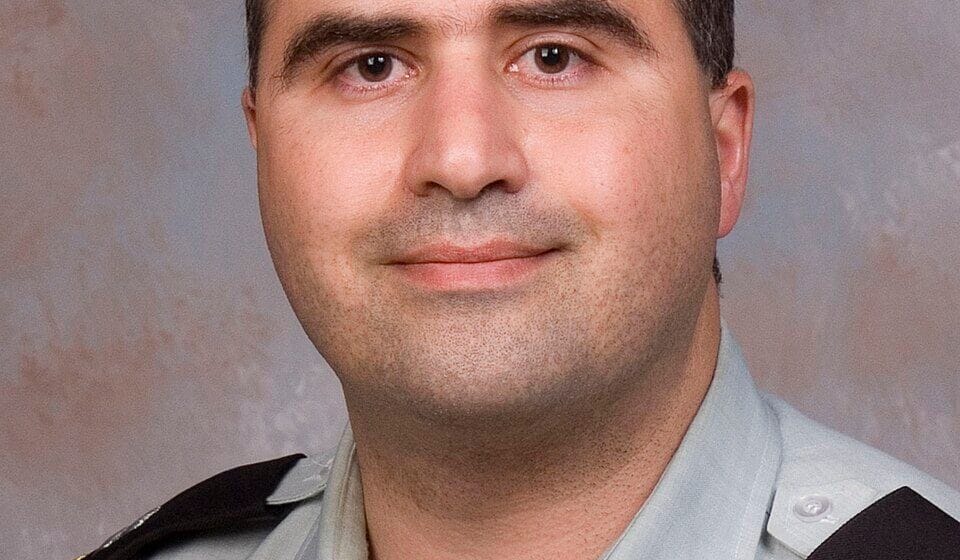
Hasan, a former Army psychiatrist, was convicted of killing 13 people and injuring 32 at Fort Hood in 2009. Earlier this month, the Pentagon announced that it would livestream his execution. The people he murdered, those who survived and their families deserve lasting recognition and support. Their suffering also deserves protection from political exploitation. [2]
Should Hasan’s wheelchair use matter?
One detail makes the public execution proposal disturbing: Hasan uses a wheelchair. According to Associated Press, law enforcement officers shot him during the 2009 attack, leaving him paralysed from the waist down. He has used a wheelchair since then. [3] That physical vulnerability therefore adds to the barbarity of arranging his death as a public performance. The government would have invited the world to watch soldiers shoot a captive man with a significant disability. The authority holding him would control his confinement, the execution arrangements and the proposed broadcast. His wheelchair makes that imbalance of power especially visible.
Disability does not erase responsibility for murder. It also does not remove the right to humane treatment. We can uphold both principles together. We can condemn Hasan’s actions without justifying whatever the state subsequently does to him. The severity of a crime cannot settle every question about the punishment imposed for it. We should not portray wheelchair users as helpless. Disability says nothing about a person’s character. Instead, the relevant facts are Hasan’s physical vulnerability and the state’s control over his custody. A camera would add nothing to that control; it would give his captors an audience.
Public execution and the limits of punishment
Archbishop Timothy Broglio, who oversees Catholic pastoral care in the US military, raised this concern. In his 12 October statement, he questioned broadcasting “the execution of a man in a wheel chair to the whole world”. He also asked whether the decision respected human dignity. His concerns about public execution remain relevant after the livestream’s cancellation. [4]
Cancelling the cameras prevents one form of public exposure. However, it does not resolve the moral question of executing a prisoner whom the state already holds in custody. For those who oppose capital punishment, the wheelchair makes the circumstances more confronting, while the underlying principle remains universal: human dignity cannot depend on whether a prisoner is physically strong, sympathetic or popular.
The politics behind a televised execution
The public execution proposal also had a theatrical element. Pete Hegseth argued that making the execution public would help deter others. In particular, Reuters reported that he wanted the military to carry it out at the location, time and day of the week of the original attack. That symbolism would have connected the state’s killing directly to the crime it was punishing. [5]
Hegseth directed his deterrence argument at would-be offenders. The evidence does not establish a broader intention to frighten ordinary citizens. But a worldwide broadcast would have displayed the government’s power over life and death to an audience far beyond prospective attackers. Its capacity to intimidate that wider audience deserves examination alongside the administration’s stated justification. A public execution communicates something about authority. It risks encouraging citizens to associate leadership with a willingness to inflict suffering, and to judge restraint as weakness. The government is showing them what it can do to a person in its custody. Similarly, our coverage of fear-based politics examines how appeals to insecurity can displace scrutiny of government decisions.
Some supporters were explicit about the display of power. Anduril cofounder Palmer Luckey called for executions to be “public and brutal”, describing them as an expression of the state’s monopoly on violence. He also argued that visibility would force voters to confront what their government does, potentially provoking either approval or revulsion. [6]
Secrecy can protect abusive institutions, and a public that supports executions should confront what they involve. However, a public execution does not become accountable simply because it has an audience. Independent witnesses, access for journalists and oversight let people question official accounts. A government promoting its own broadcast also needs scrutiny over who controls the images and whether the event invites criticism or celebration.
Public execution and the deterrence claim
Many Americans rejected the spectacle. For example, a Reuters/Ipsos poll conducted from 16 to 19 October found that 71 per cent of US adults considered showing federal or state executions on television or the internet inappropriate. That included 63 per cent of Republicans and 85 per cent of Democrats. The nationally representative survey involved 1,679 adults. [7] The poll therefore challenges claims that a public execution speaks for ordinary Americans. Many rejected the proposal, including people who otherwise support the government or the death penalty. The cancellation also shows that public criticism can change a government’s decision.
Claims that public execution deters crime need evidence. For example, in its 2012 review, the US National Research Council concluded that the research it examined could not reliably establish whether capital punishment reduced homicide, increased it or made no difference. One problem was that studies did not properly account for alternative punishments, including life imprisonment. [8]
We should not exaggerate that finding into proof that executions can never deter anyone. Equally, it offers no basis for treating deterrence as settled science. Moreover, broadcasting a public execution adds a claim requiring its own evidence: that making a killing publicly visible would prevent more harm than the punishment alone. Predicting public fear does not prove that a broadcast would prevent killings.
How public executions can normalise violence
However, the concern about normalising violence extends beyond a change in the murder rate. It concerns the permission people give themselves to enjoy, excuse or demand cruelty. A public execution risks turning the question of whether the state can justify a punishment into a contest over who is willing to watch it and who objects. Psychologist Albert Bandura’s work on moral disengagement describes how people can justify harmful conduct by presenting it as serving a worthy purpose, minimising suffering or dehumanising the person harmed. His framework helps explain how cruelty becomes acceptable to its participants and supporters. It helps us examine the rhetoric around punishment, although it cannot predict individual viewers’ behaviour. [9]
Supporters can invoke a crime to tell spectators that they should ignore their discomfort. They can then treat sympathy for suffering as sympathy for the offence. As a result, someone who questions the punishment may have to prove that they care about the victims before anyone will consider their objection. Nobody has to excuse Hasan to reject that logic. Human dignity limits what governments may do to people we condemn. If those limits disappear whenever public anger is strong enough, they provide little protection in the cases where restraint is most difficult.
What repeated exposure to violence can do
Fear presents a problem for defenders of public execution. Research on repeated exposure to coverage of real violence offers grounds for caution. For instance, a 2019 study by Rebecca Thompson and colleagues followed a US national sample over three years, examining responses to the Boston Marathon bombings and the Pulse nightclub massacre. Greater exposure to bombing coverage predicted later post-traumatic stress symptoms. [10]
Those symptoms predicted worry about future events, which in turn predicted greater media consumption and distress after the subsequent massacre. However, these were observational findings about coverage of mass violence, rather than an execution broadcast. They do not prove that watching a particular video causes trauma. Nevertheless, they challenge easy assumptions that exposing people to more violence will leave them feeling safer. [10]
The audience cannot always choose
The audience for a public execution would extend beyond adults who deliberately chose to watch. For instance, users could repost recorded clips, exposing people without warning. A parent declining to open the stream would have no guarantee that their child would never see a copy. The decision to broadcast therefore carries responsibilities towards people who never asked to become witnesses. A warning before the original broadcast would not follow every copy. People who avoided the official stream could still encounter excerpts in a group chat, a news feed or a video posted under an unrelated description.
The recording could also outlive the presentation. A clip might circulate without the accompanying explanation, or viewers could edit it into material celebrating the killing. Critics and extremists could reuse the same images for different purposes. Once others distributed the images, a government could not reliably control their meaning or prevent repeated exposure. Cancelling the broadcast avoids creating that permanent record for public circulation.
A public execution could frighten some viewers while encouraging others to approve of similar displays. People who already distrust state power may see a threat where supporters see reassurance. Those are possible responses, not measured outcomes of this cancelled proposal. They matter because the government would have created the spectacle and promoted its own violence as a public lesson.
Victims and soldiers deserve a say
Politicians cannot simply claim to speak for victims. For example, Alonzo Lunsford, who survived being shot seven times at Fort Hood, told the BBC that he supported the sentence but opposed showing the whole execution uncensored to the general public, according to the ABC’s reporting. Support for punishment did not mean support for broadcasting it. [11] A public execution cannot promise closure, either.
Some people may want to witness an execution; others may find renewed attention to the perpetrator distressing. Families and survivors therefore need room for different responses. Politicians cannot assume that broadcasting a death will bring them relief, or treat their grief as permission to build an audience.
Broglio’s intervention also addressed the soldiers expected to carry out the execution. He raised the possibility of moral injury and directed Catholics assigned to the firing squad to request exemption. Broglio had presided at the funeral of Michael Grant Cahill, one of Hasan’s victims. He opposed the execution while acknowledging the lives Hasan destroyed at Fort Hood. [4] The soldiers ordered to kill him could carry the consequences long after the broadcast ended. A public audience could add another burden to a grave responsibility. Politicians should therefore consider what they are asking soldiers to do, instead of using them to create an appearance of toughness.
Human rights survive a criminal conviction
For Christians, the value of human life must remain meaningful when the person concerned has done something appalling. Condemning a terrible crime does not require celebrating the offender’s death. After all, mercy and accountability can coexist, including through imprisonment that protects others. Broglio’s objection offers a clear religious challenge to treating public killing as a display of moral strength.
Human rights standards also reject public executions. Specifically, the UN Human Rights Committee’s General Comment No. 36 identifies them as contrary to Article 7 of the International Covenant on Civil and Political Rights, which prohibits torture and cruel, inhuman or degrading treatment or punishment. Responding to the proposal, the UN human rights office said livestreaming would amount to a public execution and breach the prohibition of torture. [12, 11]
Australia should apply this principle consistently. The Department of Foreign Affairs and Trade states that Australia opposes the death penalty in all circumstances and for all people. That principle applies to an ally as much as any other country. Australian leaders should therefore welcome the cancellation while continuing to oppose the execution itself. [13]
The public execution debate is not over
News organisations can report the case and investigate decisions about punishment without replaying someone’s death. Platforms should also consider how they would prevent any future execution broadcast from reaching people involuntarily. The abandoned plan provides an opportunity to address those responsibilities before another government tries to turn a prisoner’s final moments into an online event. Our coverage of political intimidation in Australia examines that responsibility: publishers should consider what their decision to repeat harmful material adds to public understanding.
Trump’s reversal removed the threat of a public execution broadcast. The proposed shooting of a wheelchair user nevertheless exposed how readily a prisoner’s physical vulnerability could become part of a government’s display of power. The United States should therefore commute Hasan’s sentence to life imprisonment. His victims’ dignity does not depend on giving anyone another killing to watch.
References
1. Reuters | 15 October 2026; updated 16 October
Trump shuts down Hegseth plan to livestream military execution
2. Associated Press | 8 October 2026
Pentagon says the firing squad execution of Fort Hood shooter Nidal Malik Hasan will be livestreamed
3. Associated Press | 15 October 2026
Trump, after bipartisan backlash, says Pentagon will not livestream execution of Fort Hood shooter
4. Archdiocese for the Military Services, USA | 12 October 2026
Archbishop Broglio Issues Statement on Proposed Execution Livestream
5. Reuters | 12 October 2026
Catholics in US Army must not participate in firing squad, prominent archbishop says
6. Business Insider | 12 October 2026
Palmer Luckey says that executions should be public and brutal
7. Ipsos | Fieldwork 16 to 19 October 2026; question TM3515Y26
Reuters Ipsos News Issue Survey October 2026 Topline
8. National Research Council, National Academies Press | 2012
Deterrence and the Death Penalty
9. Albert Bandura, Personality and Social Psychology Review | 1999
Moral Disengagement in the Perpetration of Inhumanities
10. Rebecca R. Thompson and colleagues, Science Advances | 2019
Media exposure to mass violence events can fuel a cycle of distress
11. ABC News | 10 October 2026
White House officials say Trump open to live streaming Fort Hood killer’s execution
12. UN Human Rights Committee | Adopted 2018; document CCPR/C/GC/36 issued 2019
General Comment No 36 on the right to life, paragraph 40
13. Department of Foreign Affairs and Trade | Accessed 24 October 2026
Australia’s strategy for abolition of the death penalty