Australia needs a politics that can withstand fierce disagreement without making cruelty a form of entertainment or intimidation a condition of public service.
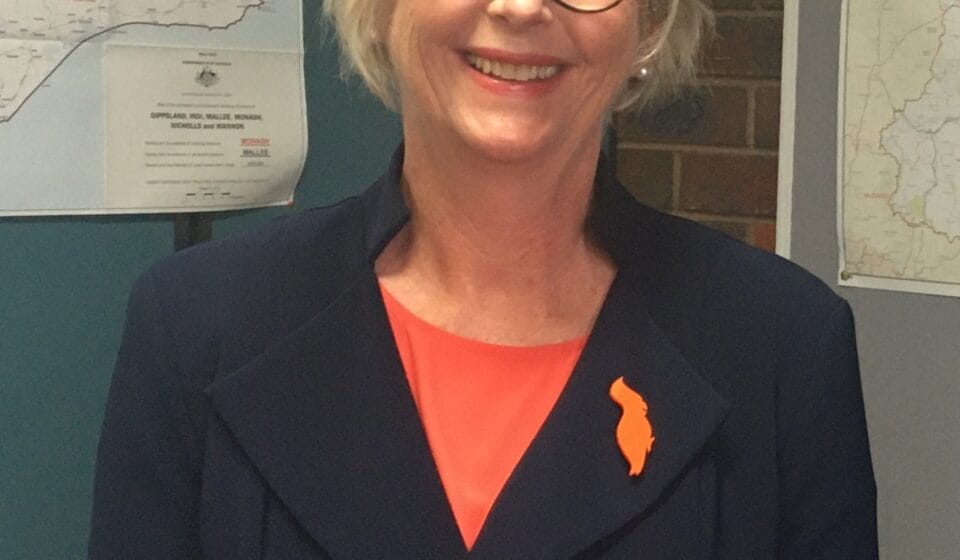
Helen Haines should have been able to go to work and return home safely. That is the starting point, before the political arguments and the statements about what kind of country we want to be. On 19 October, the independent member for Indi was struck by a vehicle outside her electorate office in Wangaratta. Police allege the attack was targeted. As this article was prepared on 21 October, Haines remained critically injured and a man had been charged. Her family, colleagues and community face the consequences of an appalling act of violence.
Police were still investigating the motive. There is no established evidentiary basis to connect the alleged attack to Pauline Hanson, One Nation’s cartoons or any particular political campaign. We should resist speculation about the accused’s beliefs and leave questions of criminal responsibility to the courts. But uncertainty about this case does not require silence about the conditions in which Australians participate in politics. Threats, humiliation and the portrayal of opponents as enemies deserve examination on their own evidence. The attack on Haines makes that examination urgent, without supplying an explanation for what happened to her. When Australians say we need to lower the political temperature, we should mean something more demanding than asking everyone to be nicer for a few days.
Threats are narrowing democratic life
AFP figures reported this week recorded 1,067 reports of harassing, nuisance, offensive and threatening behaviour in 2025–26, compared with 951 the previous financial year. The category covers high office holders, federal parliamentarians, electorate offices and protected establishments. These are reports across a broad category, not 1,067 proven death threats or completed attacks. The distinction matters; the scale remains disturbing. In fact, intimidation imposes costs long before someone is physically injured. For example, a public meeting can be cancelled. Staff may become reluctant to open the office door. A potential candidate can decide that exposing their family to abuse is too high a price.
Political scientist Dominic O’Sullivan told SBS that fear can damage the accessibility MPs need to represent their constituents. That is a practical democratic loss: ordinary people have fewer opportunities to speak to the people elected to help them. For that reason, security is necessary. Yet a democracy that responds only with barriers and guards risks accepting the intimidation that made them necessary. We also need to examine what public figures say, what parties pay to distribute and what audiences are encouraged to applaud.
Hanson cannot outsource responsibility to a cartoon
For example, One Nation’s Please Explain animations are political communications. Their format does not make the messages inconsequential, and calling them satire does not settle whether they are responsible. The July episode targeting Andrew Hastie repeatedly depicted him as a “traitor”. The dispute concerned, among other things, his evidence in Ben Roberts-Smith’s defamation proceedings. Hanson defended the animation as satire and denied that she herself was calling Hastie a traitor.
In our earlier article, Clash of the Titans: Hastie, Ben Roberts-Smith and One Nation, we argued that Hastie deserved credit for standing by his sworn evidence, regardless of our disagreements with his politics. We also raised the risk that attacking a prominent witness’s loyalty could discourage others with less public support from coming forward. That concern was about the conditions needed for honest testimony, not a claim that the cartoon had demonstrably silenced anyone. We do not need to agree with Hastie’s politics to recognise the problem. Giving evidence in a court should not become grounds for a party to invite public contempt for someone’s loyalty. Political disagreement can address a person’s decisions. Branding them a traitor suggests something more sinister about their right to belong.
That distinction matters because democratic institutions depend on people being willing to participate even when doing so makes powerful people angry. Therefore, witnesses should be able to testify without political loyalty becoming the test of their character.
Mocking women’s health adds to the hostility
Similarly, the recent cartoon mocking Jacqui Lambie’s vaginal prolapse turned a personal experience into political ridicule. Lambie had publicly discussed her experience while arguing for veterans’ healthcare. One Nation made her medical condition material for ridicule. Hanson initially told her to “get over it”, then apologised on 20 October and said she had asked for the episode to be changed. She said she had not seen it before publication and would scrutinise future videos more closely. Nevertheless, that reversal should be recorded fairly. It also exposes the weakness of the original defence. A woman’s willingness to discuss an intimate health problem is not permission for a political party to humiliate her over it. Other women watching can reasonably wonder what would happen if they spoke publicly about their own experiences.
Moreover, research helps explain why the format deserves scrutiny. Jordan McSwiney and Kurt Sengul’s peer-reviewed study examined 34 Please Explain cartoons. Their qualitative analysis found that humour and irony could soften exclusionary messages involving racism, misogyny and queerphobia, making them more palatable beyond committed far-right audiences. This was an analysis of political communication, not an experiment proving that a cartoon causes violence. Its relevance is narrower and persuasive: humour can make a message easier to circulate while giving its authors a ready defence when challenged. The question is not whether Australia should tolerate offensive comedy. It is whether a party seeking public power should take responsibility for the hostility it chooses to package as entertainment.
Violent language has reached the parliamentary floor
However, the problem extends beyond One Nation. In a recent parliamentary dispute over tax office credit card payments, Liberal frontbencher Angie Bell said Anne Aly and Anthony Albanese should be “shamed and stoned in the square”. Bell withdrew the remark and subsequently described it as a poor choice of words made in the heat of the moment. In particular, the context makes that choice of imagery more revealing. A disagreement about payment arrangements became an image of public physical punishment.
Aly said she had received 19 death threats that week and had previously received threats using the language of stoning. She described Bell’s comments as racist and misogynistic. In an ABC interview, Aly also explained why, as a survivor of domestic violence, language normalising violence against women mattered to her. These were Aly’s accounts; they do not establish that Bell caused those threats. Although withdrawal matters, leaders should also explain the boundary they crossed. Otherwise, “heat of the moment” becomes a way to avoid examining why violent punishment was available as a parliamentary punchline in the first place.
No party should accept that standard from its own representatives. Nor should anyone’s protection depend on whether we like their voting record. Hanson and Bell are entitled to safety too. Condemning their conduct creates no licence to threaten them.
Migration debate is being used by extremists
Australians can argue about migration levels, housing supply and the capacity of public services. Those arguments need evidence and policy choices. They do not require treating migrants as a hostile population. At the January 2026 March for Australia rally in Sydney, ABC reporting documented neo-Nazi symbols and former National Socialist Network members, including one wearing a marshalling vest. Police also charged a participant over alleged hate speech. Hanson attended the separate Brisbane rally with other politicians. These were different events; her presence in Brisbane does not establish responsibility for conduct in Sydney.
The documented extremist involvement nevertheless demands a response from anyone associated with the broader mobilisation. Organisers should exclude neo-Nazis, reject racial scapegoating and make clear that Australians’ belonging does not depend on ancestry. That does not mean every rally participant shares an extremist ideology. It means politicians cannot measure a gathering only by the number of potential supporters it contains. They must also examine who is helping organise it and which ideas are being given space.
People struggling with rent and bills deserve policies that address those pressures. A campaign that directs resentment towards a neighbour’s ethnicity offers them an enemy without fixing the problem.
Minority communities are already paying the price
Likewise, the call for a less hostile politics must extend beyond Parliament. Ordinary Australians should not have to wait until an MP is injured for their own experiences of intimidation to be taken seriously. The Australian Human Rights Commission’s 2026 assessment warns of rising transphobia and anti-LGBTIQA+ hate. It also identifies dehumanising media coverage as a potential contributor to the normalisation of prejudice against trans and gender diverse people.
Of course, there is room to debate the details of healthcare, sport and other policies. There should be no need to portray an entire minority as fraudulent, predatory or undeserving of an ordinary life. The people discussed in these debates still have to catch the train, attend school and turn up at work after the broadcast ends. Asking them to absorb endless suspicion politely is not a serious approach to civility. Politicians and commentators should be precise about the policy they contest and accountable for claims about the people affected.
Jewish and Muslim Australians deserve safety
The commission’s Seen & Heard project documents another part of the problem. Through consultations with Arab, Jewish, Muslim, Palestinian and Israeli communities in Australia, it heard accounts of physical assault, online abuse, exclusion and fear in the aftermath of the war in Gaza. These are community accounts, not a population-wide prevalence survey. Opposition to the Israeli government’s conduct does not justify threatening Jewish Australians. Concern for Jewish safety does not justify treating Palestinians or Muslims as collectively suspect. Each community’s experience warrants attention without being used to discredit another’s.
We can defend peaceful protest and insist on accountability for governments while rejecting intimidation of people because of their religion or background. Applying that standard consistently would do more to lower tensions than another argument about whose fear counts.
Online hostility rewards poor behaviour
Meanwhile, online engagement provides incentives for the repeated production of inflammatory content. A 2021 study by Steve Rathje, Jay Van Bavel and Sander van der Linden analysed roughly 2.7 million posts from US congressional and news media accounts. Posts about political opponents were shared or retweeted about twice as often as posts about the authors’ own political group.
The study concerns US social media data. It neither measures Australian political violence nor proves that platforms cause an individual attack. It does identify an engagement incentive that Australian publishers and parties should take seriously: content about the other side can attract disproportionate attention. An outraged response can help a clip travel just as an approving response can. Publishers therefore need to consider whether replaying a provocation adds public understanding or merely extends its distribution. Readers deserve the relevant words and context; they do not need every insult repeated as a spectacle.
ASIO’s 2025 threat assessment provides a separate warning. It described grievance narratives, conspiracies and online echo chambers that had evolved since COVID, producing a threat environment vulnerable to sudden changes. That assessment is broader than party politics and should not be used to diagnose the accused in the Haines case. It does show why public leaders cannot treat conspiratorial hostility as harmless background noise.
Lowering the temperature requires decisions
Therefore, a useful response starts with parties reviewing the material they authorise. They should reject violent imagery directed at opponents, personal medical humiliation and accusations of betrayal used in place of argument. When something crosses that line, correcting it prominently is more credible than blaming the audience for taking offence.
Parliament needs consistent standards for violent language, including when it comes from a member’s own side. Campaign organisations need clear rules against threats and harassment, with practical ways for staff and volunteers to report them. Platforms should enforce their rules against threats and targeted abuse, and explain what action they take.
Protecting debate while rejecting intimidation
However, none of this should become a pretext to shield governments from scrutiny or restrict peaceful protest. Anger at injustice can be justified. A person facing discrimination does not owe a calm performance to someone denying their dignity. Strong criticism of an institution, policy or public official is part of democratic life. The standard should concern what people do with their anger. Evidence, organising and forceful argument allow others to answer. Threats and dehumanisation make participation more dangerous.
Equally, that standard must apply to publications like thewokely. We can name racism and criticise a politician’s conduct without inventing motives, treating allegations as convictions or encouraging contempt for everyone who voted differently. As we argued in our Hastie article, recognising integrity across party lines makes criticism more credible. Ultimately, readers should be able to trust that our judgement rests on conduct rather than political allegiance.
Helen Haines and her family deserve care and privacy through what follows. Her constituents deserve a representative who can serve them safely. Every Australian deserves the same assurance that entering public life, or simply being drawn into a public controversy, will not mean surrendering their safety.
The next test will come when an inflammatory video promises attention, a violent phrase draws a laugh or a hostile crowd offers votes. That is when politicians will show whether this week’s calls for restraint meant anything.
References:
ABC News. “Helen Haines live updates.” 21 October 2026. Read source.
Reuters. “Suspect in vehicle attack on Australian lawmaker appears in court as police probe motive.” 21 October 2026. Read source.
News.com.au. “Andrew Hastie reveals death threats against his children.” 20 October 2026. Includes reporting of AFP figures on threatening and abusive behaviour. Read source.
SBS News. “How a ‘festering’ threat changed Australia’s political landscape.” Read source.
ABC News. “Hanson’s overreach on Hastie kicks Liberals into gear.” 11 September 2026. Read source.
Macquarie University, The Lighthouse. “Make ’em laugh: How One Nation uses comedy to normalise harmful ideas.” 15 September 2026. Read source.
ABC News. “Pauline Hanson to change One Nation cartoon mocking vaginal prolapse.” 20 October 2026. Read source.
McSwiney, J., and Sengul, K. “Humor, Ridicule, and the Far Right: Mainstreaming Exclusion Through Online Animation.” Television & New Media, 25(4), 315–333, 2024. Read study.
ABC News. “Anne Aly accuses Liberal MP Angie Bell of racism over ‘stoning’ comment.” 13 October 2026. Read source.
Australian Government, Treasury Ministers. Anne Aly’s interview with Nadia Mitsopoulos, WA Mornings, ABC Radio. 14 October 2026. Read transcript.
ABC News. “Anti-immigration rallies take place in major cities across Australia.” 26 January 2026. Read source.
Australian Human Rights Commission. Australian Human Rights Assessment 2026: sexual orientation, gender identity and intersex. Read assessment.
Australian Human Rights Commission. “Seen & Heard project.” Community findings concerning racism and discrimination affecting Arab, Jewish, Muslim, Palestinian and Israeli communities in Australia. Read source.
Rathje, S., Van Bavel, J. J., and van der Linden, S. “Out-group animosity drives engagement on social media.” Proceedings of the National Academy of Sciences, 118(26), e2024292118, 2021. Read study.
Australian Security Intelligence Organisation. “ASIO Annual Threat Assessment 2025.” 19 February 2025. Published by the National Intelligence Community. Read assessment.
Herbert, Hux. “Clash of the Titans: Hastie, Ben Roberts-Smith and One Nation.” thewokely, 12 September 2026. Read article.