The right blames feminism for pushing boys towards the manosphere. The harder truth is that technology companies and online influencers have learned how to turn male insecurity, loneliness and anger into profit.
A boy says he feels invisible. Politicians tell him feminism is to blame. Online, an influencer promises that he can become powerful again — usually for the price of a subscription, a course or a place in a private community.
His feeling may be genuine. The people offering answers are also selling him something.
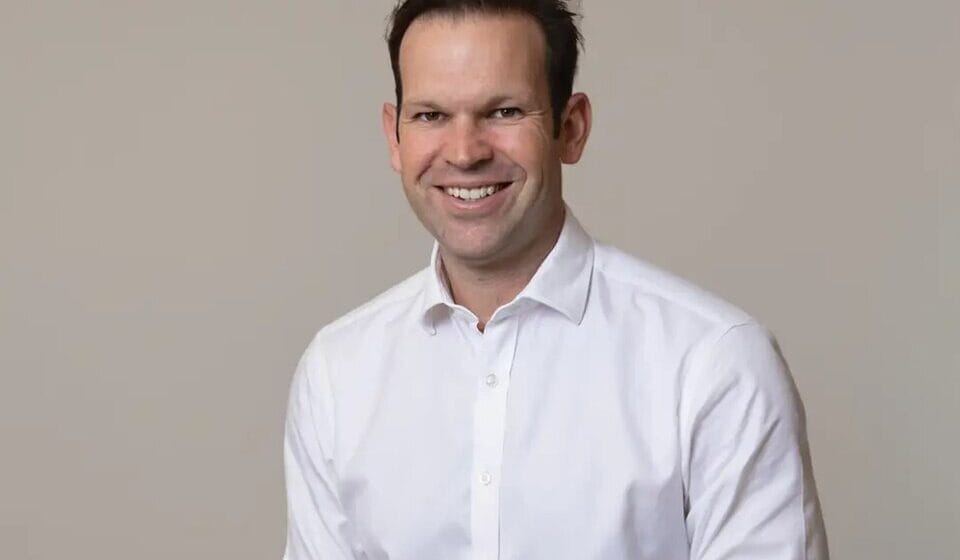
On 3 September 2026, Nationals leader Matt Canavan blamed what he called the “feminisation” of Australia’s school curriculum and described respectful relationships education as a “recruitment ground for Andrew Tate”. He argued that lessons about gender, power and consent make boys feel as though teachers blame them, driving them towards the very misogynists those lessons are supposed to challenge.
Canavan doubled down the following day, dismissing concern about recommendation algorithms while blaming what he called “anti-boy ideology” in schools.
It is a potent story because it begins with something true: some boys are struggling. Many feel lonely, uncertain about their place in the world or suspicious that the institutions around them have little positive to say about being male.
But recognising the wound does not make Canavan’s diagnosis right.
Canavan has not shown that female teachers or consent lessons push boys into the manosphere. What the evidence does reveal is more unsettling: the attention economy has become extremely good at locating male insecurity, feeding it increasingly aggrieved explanations and turning that attention into money.
Boys are struggling. Start there.
There is no serious case for dismissing boys’ problems.
In 2024, 82 per cent of Australian men aged 20 to 24 had attained Year 12 or an equivalent qualification, compared with 91 per cent of women. The Australian Institute of Health and Welfare reports that men experienced greater social isolation than women across every age group in 2024. More than three-quarters of people who died by suicide in Australia that year were male, according to the Australian Bureau of Statistics.
Those figures describe different populations; they do not add up to one simple story. Even so, they make one point impossible to avoid: boys and men face real problems that deserve serious attention.
This is not a competition with the harms experienced by women and girls. A society capable of caring about girls’ safety should also be capable of caring about boys’ disengagement, loneliness and despair.
Progressives make a costly mistake when they meet every concern about boys with a rebuttal. If a boy says he feels lost, telling him that others have it worse will not help him find his way. It may simply leave the conversation open to someone who promises sympathy and supplies a scapegoat.
Taking boys seriously, however, also means being honest about what is hurting them.
Matt Canavan has identified the wrong culprit
Canavan deserves credit for treating boys’ alienation as a political problem. The trouble begins with his explanation. His story folds academic frustration, family stress, loneliness, economic insecurity and fear of rejection into one reassuring answer: none of this is your fault; feminism took something from you.
That message is emotionally efficient. It transforms vulnerability into grievance and uncertainty into an enemy.
It also relieves politicians of harder work. Blaming female teachers is cheaper than funding smaller classes, youth services, mental healthcare, vocational pathways and community programs. Attacking lessons about consent is easier than asking why so many young people rely on commercial platforms for friendship, identity and advice.
Canavan also wants more male teachers. That is a worthwhile goal. Boys benefit from knowing caring, thoughtful men in positions of trust, and teaching should be a viable and respected career for men. But a staffing imbalance is not evidence that women are feminising boys. Masculinity is not a substance delivered by the nearest adult man, and female teachers are not an ideological hazard.
The better question is not whether boys encounter women at school. It is whether all teachers have the time, training and support to understand boys without excusing harmful behaviour or treating maleness itself as a problem.
The curriculum does not say what Canavan claims
The factual basis of the current argument is shaky.
When the ABC checked Canavan’s description against the National Respectful Relationships Education Framework, it found no mention of “male privilege”. Instead, the framework asks students of all genders to consider how identities, experiences, power and inequality can affect relationships. It also explicitly supports boys and young men to explore masculinity in healthy ways.
The framework itself calls for teaching that is age-appropriate, evidence-based and developed with expert guidance. That is not a war on boys. It is an attempt to give young people tools for relationships they are already navigating.
None of this guarantees that every classroom gets it right. A clumsy lesson can make boys feel that the teacher sees them as problems to manage. If students experience a program as accusation rather than education, schools should listen, examine the delivery and improve it.
But poor delivery is an argument for better training, not for abandoning consent or equality. It certainly does not prove that teaching respect recruits boys to misogyny.
The algorithm does not care what it teaches
While politicians argue about whether schools make boys feel welcome, commercial platforms are studying what keeps them watching.
In a nationally representative survey of 3,454 Australian children aged 10 to 17, eSafety found that 63 per cent had encountered content associated with harm in the previous year. Nearly half had seen or heard offensive, sexist or hurtful material about girls and women. Of those describing their most recent encounter, 69 per cent said they came across it accidentally, including through a feed or pop-up.
That does not mean every boy enters a radicalisation pipeline. Nor does it prove that a recommendation caused any particular belief. It does show that children need not go looking for harmful material to find it.
A University of Melbourne study of 1,122 Australians aged 13 to 17 found that engagement with manosphere content, pornography and online dating had the strongest associations with hostile attitudes towards women. Survey associations cannot prove what caused an individual teenager’s beliefs. They do, however, give us good reason to examine the online environments reinforcing those beliefs.
A small controlled study by researchers at Dublin City University illustrates how quickly recommendation systems can escalate. The researchers created ten blank accounts on TikTok and YouTube Shorts. The platforms began showing male-identified accounts masculinist and anti-feminist material within the first 23 minutes. After two to three hours, the researchers classified most recommendations to the accounts that showed interest in that content as toxic.
The study used artificial accounts, so it cannot tell us what every real teenager sees. What it reveals is the machinery of escalation: watch, pause or engage, and the system supplies a more concentrated version.
An algorithm does not need to believe in misogyny. It only needs to learn that grievance holds attention.
First comes self-improvement. Then comes resentment.
The manosphere rarely introduces itself by saying it wants boys to hate women. It enters through familiar concerns: fitness, money, dating, confidence, discipline and the desire to belong.
There is nothing wrong with those interests. Much of the advice may initially sound useful: exercise, work hard, stop drifting and take responsibility. That is what makes the sales funnel effective.
The offer can then change. Self-respect becomes dominance. Rejection becomes humiliation. Women become a category to decode, control or blame. The creator who first named a boy’s loneliness now offers an enemy responsible for it, followed by a paid course, premium community, supplement, merchandise line or affiliate link.
Researchers at the Australian National University describe this ecosystem as a transnational profit enterprise that combines traditional gender hierarchies with promises of wealth, status and an ideal body. Andrew Tate’s former online academy made the mechanism unusually visible: members were rewarded through an affiliate scheme for circulating his clips, helping provocative material travel while recruiting new customers.
Influencers sell belonging before they sell resentment. The belonging earns trust; the resentment keeps the audience emotionally activated; the product offers a way to prove commitment.
Platforms and creators do not need to share an ideology for their incentives to align. One makes money from sustained attention. The other converts attention into customers. A lonely boy’s anger can serve both business models.
Consent education also gives boys agency
Public debate often frames consent education as a warning to boys: do not harm girls. Preventing harm matters, but that is not the whole lesson.
Consent education teaches boys that their own boundaries matter too. It helps them recognise coercion, communicate desire without entitlement, accept rejection without treating it as humiliation and notice when a friend may be in danger. Just as importantly, it gives boys language for experiences they may feel ashamed or confused to describe. A good lesson treats them not as suspects, but as people capable of care, judgement and growth. It also acknowledges that others can pressure, exploit or abuse them.
Remove that education and the questions do not disappear. Young people will still absorb messages about sex, status and relationships. They can learn through trusted adults and honest conversations, or we can leave the job to pornography, influencers and social media feeds that aim to keep them watching.
Schools should not speak to boys as if they are perpetrators-in-waiting. A lesson that begins with suspicion will quickly lose the room. Good teaching brings boys into the conversation as participants with their own questions, vulnerabilities and moral agency. That is the case for thoughtful, strengths-based respectful relationships education—not for removing it.
Teaching a boy to hear and respect “no” protects women and girls. Making sure he knows that he can say “no”, survive rejection and ask for help protects him too. Good consent education does both.
Boys need more than just criticism
Debunking the manosphere will not, by itself, meet the needs that make it attractive.
Boys need connection that is not conditional on performative toughness. Their sense of purpose should rest on more than dominance or wealth. They need places to become competent, useful and known: classrooms, workshops, sports clubs, arts programs, youth groups and workplaces where adults notice when they withdraw.
Male role models matter too. That can mean fathers, teachers, coaches, uncles, tradesmen, artists and community leaders. But the value lies in what those men model, not simply in their presence. A man who can be dependable without being controlling, ambitious without being contemptuous and emotionally honest without collapsing gives a boy something no lecture can supply: a life he can imagine inhabiting.
Online influence should not make us forget the power of ordinary relationships. The Adolescent Man Box research found that parents and other real-life connections remained boys’ strongest influences. Boys are not helpless vessels into which an algorithm pours beliefs. They can question what they see, especially when trusted people give them the language and confidence to do it.
That means the response must be larger than content moderation. Australia should invest in boys’ educational engagement and mental health; recruit more men into teaching without denigrating women; train educators to include boys rather than presume their guilt; support community programs that create belonging; and require platforms to give users meaningful control over recommendation systems.
Most of all, adults need to stay in the conversation. Asking a boy what an influencer gets right will often reveal more than beginning with condemnation. We can validate the desire for confidence, discipline and respect while challenging the lie that these things require superiority over women.
The choice is not boys or feminism
The claim that feminism causes male pain, strips boys and men of personal agency and diminishes their place in society sets up a false choice: either we care about boys or defend equality for girls. Politically, that is useful. It recasts every gain in freedom for women as something taken from men.
Feminism has changed men’s role in society, as equality was always going to do. A social order built around male authority and female dependence or submission could not continue unchanged. But change is not erasure. Men can still provide, protect, build and lead alongside women. They simply no longer own those roles, and boys do not have to perform them to prove their worth. That gives boys more agency, not less.
Leadership should follow strengths, not gender
Boys and men can benefit from female leadership too. Whether she is a teacher, manager, coach, political leader, wife or partner, a woman can model judgement, courage and integrity. She can also show boys and men that authority is not inherently male and that respecting a woman’s leadership does not diminish them. Shared leadership is not male failure. Nor does every man naturally want to lead. Some are more comfortable supporting, collaborating or allowing someone else to take responsibility. Forcing those men to perform authority or dominance can leave them anxious, overwhelmed and ashamed of strengths that society wrongly treats as lesser.
If a man’s life flows better when his wife or partner leads in areas where she is stronger, that can be a healthy and mutually supportive arrangement. Both people should choose it freely and retain a voice in the relationship. Choosing to follow is still an exercise of personal agency. Leadership is a role, not a measure of manhood.
Relationships free from coercion benefit boys too. So does a culture that lets them ask for help without calling them weak, show care without questioning their masculinity and measure their worth by more than sex, status or income. This is the same freedom feminism has long pursued: the freedom to build a life that gender does not dictate. There is still room to criticise shallow progressive language, clumsy school programs and institutions that offer boys no positive vision of boyhood. A boy who hears only what he must not become may wonder what he can become. That failure needs correcting, but it does not make equality the enemy.
The manosphere often comes between boys and their mothers
One relationship the Manosphere worldview often damages is the bond between a boy and his mother. Australia’s eSafety Commissioner explains that manosphere spaces often portray women as manipulative, irrational or undeserving of respect. A boy who absorbs that message may start hearing ordinary parenting through the same filter. A boundary becomes female control. Concern becomes nagging. Questioning an influencer becomes proof that his mother does not understand him.
This can create a cruel loop. His mother sees him withdrawing and tries to reach him. He interprets her intervention as confirmation that women want to control him, then retreats further into an online community that rewards his distrust. The influencer gains authority while one of the boy’s most important real-world relationships weakens.
Mothers should not have to repair that damage alone. Fathers, teachers, coaches and other men must show boys that listening to women is not negative and that contempt for a mother is not independence. Parents should stay close, remain curious rather than confrontational and help boys maintain relationships with a wider circle of trusted adults.
There is still room to criticise shallow progressive language, clumsy school programs and institutions that offer boys no positive vision of boyhood. A boy who hears only what he must not become may wonder what he can become. That failure needs correcting, but it does not make equality the enemy.
Who profits from this false choice?
The people monetising male insecurity exploit that gap. They tell boys they have only two choices: submit to a world that despises them or buy their way into a brotherhood that promises to restore their status. Adults owe them something better: belonging without obedience, strength without cruelty and a future that does not require an enemy.
Boys do not need protection from feminism. They need protection from people who discovered that their pain was profitable.
References
- ABC News, “Teachers hit back at Nationals claim about ‘anti-boy’ ideology in schools”, 3 September 2026.
- ABC News, “Federal politics: Canavan dismisses manosphere algorithm concerns as ‘conspiracy’ — as it happened”, 4 September 2026.
- Australian Bureau of Statistics, “Education attainment”.
- Australian Institute of Health and Welfare, “Social isolation and loneliness”.
- Australian Bureau of Statistics, “Causes of Death, Australia”.
- Australian Government Department of Education, “National Respectful Relationships Education Framework”.
- eSafety Commissioner, “How common is exposure to content associated with harm among children in Australia?”, updated 16 June 2026.
- University of Melbourne, “Young people more likely to hold hostile attitudes towards women, study finds”, August 2026.
- Dublin City University, “New research shows how TikTok and YouTube Shorts are bombarding users with misogynist content”, April 2024.
- Australian National University, “Hustle, muscle and grift: how the manosphere has grown into a money-making machine”.
- The Guardian, “Andrew Tate: money-making scheme for fans of ‘extreme misogynist’ closes”, 20 August 2022.
- Jesuit Social Services, “The Adolescent Man Box”.