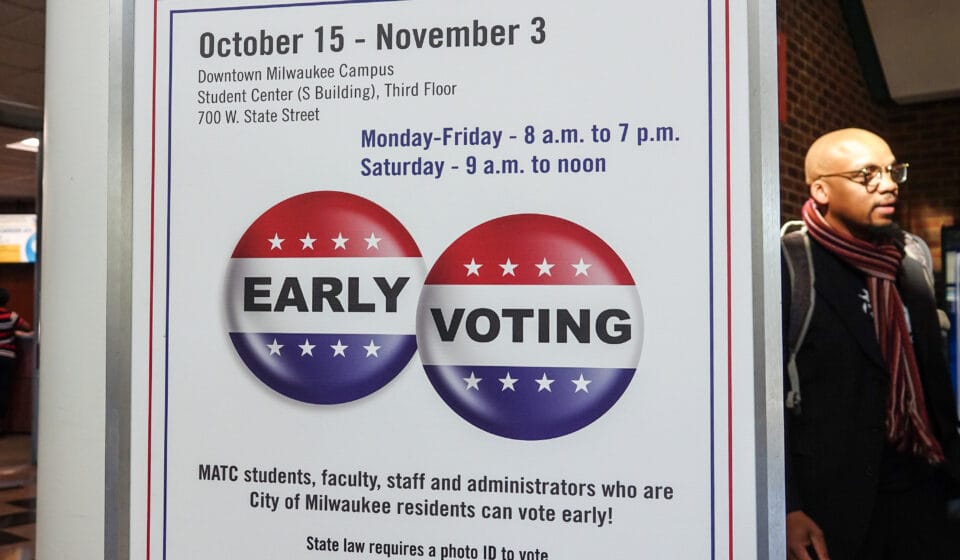
Early voting is outpacing the last US midterms in several key states. Whether that produces a change in congressional control remains uncertain, but the consequences could reach well beyond November.
The Wokely | Analysis and opinion | 26 October 2026
More Americans are casting their ballots early ahead of the 3 November midterms, with substantial increases in several states that could help decide control of Congress. For Donald Trump, the result could mean spending the remaining two years of his presidency answering to a legislature more willing to investigate his administration and resist its agenda. An Associated Press comparison put the national early count well ahead of the equivalent stage in 2022. That is significant, although it does not establish how many people will ultimately vote or which party will benefit.
The distinction matters. There is enough at stake in this election without pretending the result has already arrived. Congressional majorities determine who gets to demand documents, question officials and examine government spending. Control of the Senate also affects who becomes a federal judge. Meanwhile, reported pressure on election officials has raised a more immediate concern: whether the people administering the vote can do their work without intimidation. These are substantial questions about the exercise of power. The early ballots are the beginning of an answer.
What the early-voting figures show
An Associated Press analysis published on 22 October recorded more than 13 million early ballots nationally, against 9 million at the equivalent stage in 2022—roughly 44% higher. Ohio was up 30%, Maine 39%, and Kansas had more than doubled. The pattern was uneven: Michigan and Georgia were near their previous pace, while Iowa was down about 6%. Expanded voting access and improved data availability explain some of the increase.
These are dated ballot counts, rather than final turnout rates. There have also been local records. El País reported on 22 October that Harris County, Texas, recorded about 104,000 votes on its first early-voting day, a midterm record. Dallas County surpassed its previous opening-day record too. For Australian readers, early voting is broadly familiar as pre-polling. American totals generally include both ballots cast in person and postal votes already returned, so comparisons need to account for how people vote as well as when.
Enthusiasm is harder to measure
A voter who usually attends on election day may have decided to get it done before work this year. Someone else may be voting after sitting out the previous midterms. Both appear in the early count, but only the second adds to overall participation. Until voting finishes, we cannot fully separate those effects. Nor can party registration reveal a person’s choice. The University of Florida Election Lab distinguishes registration data from votes for candidates. Registered Republicans can support Democrats, and registered Democrats can support Republicans. Comparable party information is also unavailable in some states.
There is a temptation, particularly among people hoping Trump suffers a defeat, to interpret every queue as evidence of a backlash. The figures cannot carry that conclusion. They do not establish whether someone voted because of household costs, concern about democracy, enthusiasm for a candidate or convenience. Democrats may find encouragement in the early activity. They still have an election to contest.
The power behind a congressional majority
Control of Congress can sound like an argument over parliamentary procedure until an administration declines to explain itself. Then the practical questions emerge. Who can seek the relevant records? Who can bring officials before a committee? Who has the authority to keep pursuing an issue after the White House would prefer everyone to move on?
The majority party determines committee leadership and much of the legislative agenda. Those decisions influence which matters receive sustained scrutiny. In the Senate, Democrats need a net gain of four seats to take control. As the Council on Foreign Relations explains, a three-seat gain would produce a 50–50 chamber, with Vice-President JD Vance able to break ties.
The difference between those outcomes could determine whether the administration faces an accommodating committee chair or one prepared to insist on answers. That is why a small number of contests can have consequences far beyond their state boundaries.
What serious scrutiny would involve
Congress can seek documents, question officials and hold public hearings. Its decisions over government funding provide another means of examining executive conduct. The Congressional Research Service outlines these powers and their legal limits. They do not guarantee cooperation. An administration can resist requests, dispute a committee’s authority or fight disclosure in court. An investigation may take months before the public sees a useful result.
Even so, it can establish what officials knew, how they reached a decision and whether their public explanation matches the record. That work matters when the questions concern public spending or the treatment of people in federal custody. A Democratic majority would have to demonstrate that it could use oversight competently. Voters would be poorly served by hearings designed chiefly to generate campaign footage. Good scrutiny requires patience and a willingness to follow evidence that may complicate the original allegation. Its value lies in what it establishes, including when the facts fail to support a politician’s preferred conclusion.
Judicial appointments give the election a longer reach
The Senate’s responsibilities extend to presidential nominations, including federal judges and senior executive officials. Senators can approve or reject those nominees, giving them a direct role in deciding who exercises public authority. For voters concerned about reproductive freedom, workplace protections or equality, the relevance is immediate. Courts can be where a disputed right becomes enforceable, or where a claimed protection fails.
A nominee’s qualifications, record and approach to the law therefore deserve more than a hearing whose outcome nobody seriously questions. Control of the Senate cannot determine every future judgment. It can determine who examines an appointment and how searching that examination will be. Some of those appointments will matter long after the campaign signs come down. That gives voters a reason to look beyond the immediate satisfaction of rewarding or punishing a president.
What a Democratic victory would not deliver
There are limits, and Democrats should explain them honestly. Winning Congress would not automatically remove Trump. The House can impeach a president, but conviction requires two-thirds of senators present. The two stages have different responsibilities and thresholds. Nor would a congressional majority, by itself, undo every administration decision.
What it could provide is more persistent scrutiny, resistance to legislation and, with Senate control, closer examination of appointments. Those powers are considerable without being unlimited. Overpromising creates its own problem. If voters are told that one election will settle every grievance, ordinary constitutional constraints can later look like betrayal or incompetence. Candidates should explain which actions they would prioritise, what authority they would use and where they would need support beyond their own party. Voters deserve something more useful than a promise to fight.
The people counting the votes are under pressure
Some of the most troubling reporting concerns election administration itself. On 25 October, The New Yorker reported on Utah’s Republican Lieutenant Governor Deidre Henderson resisting federal demands for voter records. Its account described threats against officials, resistance from states and setbacks for the administration in court. Henderson’s position illustrates the obligation to protect the process even when that means challenging one’s own political side. Reuters reported on 23 October that election officials were preparing for interference, misinformation, cyberattacks and threats of violence. It also reported that available evidence shows ineligible voting is exceedingly rare.
An election requires people to perform routine tasks accurately under intense scrutiny. Threatening those workers does nothing to improve confidence in the count. Where genuine disputes arise, evidence should determine their treatment. Candidates have every right to pursue lawful challenges. They have no reasonable basis for treating defeat itself as proof that the process was corrupt.
People also need to pay the rent
Reuters’ October explainer reported that about half of voters identified living costs as their leading congressional-election issue. Roughly one in five named democratic norms. Progressive politicians should take that finding seriously. Someone deciding which bill can wait until payday does not need to be told that their concerns are less important than the constitutional argument. They need representatives who understand why the household budget has become so difficult and can explain what they propose to do.
Oversight has a place here. Examining whether public spending delivers its promised benefits, who gains from a policy and whether officials understood its likely costs can improve the debate. But scrutiny alone does not pay anyone’s rent. Democrats would also need a credible account of how they intend to make people’s circumstances better. Concern about democracy and concern about material hardship can coexist. A campaign that expects voters to choose between them has misunderstood the people it hopes to represent.
Is this really the most important midterm ever?
There is a defensible case for calling this one of the most consequential midterms in modern American history. Declaring it the most important ever requires a judgment the available evidence cannot settle. Earlier elections took place amid struggles over citizenship and basic political rights. The House of Representatives’ historical account identifies the 1874 election as a turning point in the decline of Reconstruction. Those consequences should discourage casual historical rankings.
The present case is strong enough on its own. Voters are choosing how effectively Congress will examine the administration, who will scrutinise appointments and which priorities will receive legislative attention. They are doing so amid reported pressure on election officials. No comparison with every previous generation is needed to recognise the seriousness of that choice.
What follows the result matters
From Australia, much of the campaign can look like a running contest between Trump and his opponents. The more revealing question is what candidates intend to do with the offices they seek. Democrats should explain how they would turn demands for accountability into investigations capable of establishing facts. Republicans should be asked when they would challenge the administration and what evidence would persuade them to do so. Both should accept that their obligations extend beyond party loyalty.
The early-voting figures show that millions of Americans have already made their choice. Others will vote in the days ahead. Officials must then have the time and protection necessary to complete the count. If the result gives Democrats control, the responsibility will be substantial. They will need to pursue unanswered questions, make their findings public and show voters that congressional scrutiny can produce more than another round of political theatre. The opportunity to hold an administration accountable is only useful if the people elected are prepared to do the work.
Here’s the reference list for the article, ready to copy into WordPress.
References
- Associated Press. (22 October 2026). Voter turnout is soaring in some key states, AP analysis shows.
Early-voting figures and comparisons with the equivalent stage of the 2022 midterms. - Caro, P. — El País. (22 October 2026). US midterms start with record early voting turnout.
Opening-day voting records in Harris and Dallas counties, Texas. - University of Florida Election Lab. (2026). 2026 Early Voting.
Early-voting tracker and the distinction between party registration and actual candidate votes. Accessed 26 October 2026. - Lindsay, J. M. — Council on Foreign Relations. A Dozen Numbers That Explain the Midterms.
Congressional control, Senate seat requirements and the implications for presidential appointments. - Congressional Research Service. (3 December 2024). Congressional Oversight and Investigations.
Congress’s investigative authority, oversight tools and their limitations. - United States Senate. About Nominations.
The Senate’s constitutional role in considering presidential appointments. - United States Senate. About Impeachment.
The separate responsibilities of the House and Senate, including the threshold for conviction. - Gellman, B. — The New Yorker. (25 October 2026). The State Officials Defending the Midterms from the President.
Reporting on election officials, federal demands for voter records and resistance from states. - Reuters. (23 October 2026). Midterms: Your questions, answered.
Voter priorities, election administration, ineligible voting and preparations for interference. - United States House of Representatives, History, Art & Archives. The Demise of Reconstruction.
Historical context for the significance of the 1874 elections.
Image credit
Susan Ruggles. (15 October 2018). Early Vote-9. Wikimedia Commons. Licensed under Creative Commons Attribution 2.0.