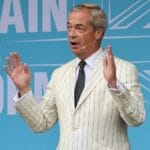
Andrew Hastie deserves credit for standing by his sworn evidence in the Ben Roberts-Smith defamation case. One Nation’s attacks have exposed a disturbing idea of loyalty: that protecting a celebrated soldier’s reputation should matter more than a witness’s duty to tell the truth.
Andrew Hastie has given Australians a reason to take his integrity seriously.
Facing attacks over his evidence in the Ben Roberts-Smith defamation case, the Liberal MP has defended his obligation to the court and the standards expected of Australian soldiers. That deserves recognition across party lines. A politician who stands by those obligations when they become personally costly is doing something worth defending.
The confrontation has the ingredients of a political spectacle: a former SAS captain, a Victoria Cross recipient, Pauline Hanson and a cartoon repeatedly invoking betrayal. Yet the question it raises reaches well beyond the personalities involved. What do we expect someone to do when telling a court what they know may damage the reputation of a former comrade?
One Nation’s treatment of Hastie makes that question unavoidable. A country that values honest testimony should be prepared to support the people who provide it.
How One Nation turned testimony into a political attack
The One Nation animation at the centre of this dispute appeared in July. It depicts Hastie complaining about people calling him a traitor, connecting that abuse to his testimony against Roberts-Smith and his support for hate speech legislation. Hanson authorised the cartoon and promoted it through her social media account. [2][3] Hastie challenged Hanson to explain the accusation or remove the video. She denied personally calling him a traitor and defended the animation as satire. By 11 September, she was continuing to promote the cartoon series rather than withdrawing the offending video. [1][2] Barnaby Joyce has since apologised, saying he had not known about the cartoon. Hastie accepted his explanation and revised his criticism of Joyce. [2] Hastie was right to accept it. He did not keep attacking Joyce as though nothing had changed. Hanson still has to answer for her own decision to promote the video.
Hastie answered to a court
Roberts-Smith brought the defamation proceedings against media organisations. Hastie appeared under subpoena in 2022. In his September interviews, he explained that giving evidence fulfilled his legal obligations and the duty he understood himself to owe through his military service. [3] The subpoena is an essential part of the story. His appearance was a formal contribution to proceedings in which lawyers could question him and a judge could assess what his evidence established.
Hastie had also spoken to journalists before he testified. Asked about that on 2GB, he said journalists approached him because they knew he had been present on a relevant mission. He stood by his conduct. [3] The argument for Hastie does not require pretending he had no involvement before the subpoena. It rests on the principle that a witness should give an honest account and allow that account to face scrutiny.
Justice Anthony Besanko described Hastie as a “straightforward witness” in the 2023 judgment. There is an important limit to that assessment: the specific Syahchow allegations discussed in that section did not succeed, following a ruling concerning another witness’s evidence. The description of Hastie should not be inflated into a claim that his testimony proved every allegation. [4]
The civil findings and criminal charges
In 2023, Roberts-Smith lost his defamation case. The Federal Court found, on the civil standard of the balance of probabilities, that allegations concerning his responsibility for or complicity in the unlawful killings of four Afghan detainees were substantially true. Those findings were serious judicial conclusions. They were not criminal convictions. [5]
A separate criminal prosecution is now underway. The Commonwealth Director of Public Prosecutions records that Roberts-Smith was charged on 7 April 2026 with five offences of the war crime of murder. The prosecution concerns the alleged deaths of five Afghan nationals between 2009 and 2012. Its latest update lists a further court mention for 13 October. [6] Roberts-Smith denies the allegations and is entitled to the presumption of innocence. [1][5] The prosecution must prove criminal guilt beyond reasonable doubt. [4] We can respect those protections while recognising the findings already made in the civil proceedings. Confusing the two cases helps nobody. Nor does supporting Hastie require predicting the criminal outcome. The value of honest testimony does not depend on whether the witness’s former comrade is ultimately convicted. Witnesses have a role in establishing the facts; they do not choose the verdict.
Military courage includes speaking honestly
Military service asks people to place extraordinary trust in one another. That makes evidence concerning a former comrade especially difficult. Affection, shared experience and loyalty can pull against the obligation to describe something troubling. Defence’s own educational material recognises this tension. Its learning package on courage discusses speaking up despite pressure, challenging inappropriate conduct and admitting mistakes. Moral courage forms part of the character it asks military personnel to develop. [7]
Hastie’s position fits that understanding of service. A soldier’s obligations extend to the standards that make the institution worthy of public trust. Treating scrutiny as disloyalty puts those standards at risk. It asks people to protect a reputation even when the proper response is to let evidence be tested. Eventually, the colleague who raises a concern can become the person everyone blames for the discomfort it causes. Australians should resist that reversal. Service can involve defending a mate against an unfair accusation. It can also involve answering difficult questions about that mate honestly. Both require judgement, and neither becomes easier when a political party turns the witness into a target.
Other witnesses will hear the message
The RSL’s response recognised the wider stakes. In its 10 September statement, it warned that branding a veteran a traitor could turn service into an accusation of betrayal whenever it became politically convenient. It also stressed that veterans remain accountable to their oath after leaving the ADF. [8] My concern goes further than the insult to Hastie. Public attacks of this kind risk making other witnesses reluctant to come forward. Someone watching the treatment of a prominent MP may reasonably wonder what support they would receive without his platform.
We cannot know whether this particular cartoon has discouraged anyone from giving evidence. The risk should concern people who want the courts to establish what happened. Witnesses must be open to questioning. Their recollections may be incomplete, disputed or wrong. Lawyers should be able to test those recollections thoroughly. But attacking someone’s loyalty to Australia because they gave evidence shifts attention away from whether their account is reliable.
A fair process needs people willing to speak and procedures capable of testing what they say. Political punishment for participating makes that task harder.
Afghan lives belong in this discussion
The dispute can easily become a story entirely about Australian reputations. Hastie’s standing, Roberts-Smith’s military honours and Hanson’s political prospects draw attention, while the Afghan people at the centre of the proceedings recede from view. The prosecution alleges that five Afghan nationals who were not taking an active part in hostilities were killed. Those allegations remain for the criminal process to determine. [6]
The people concerned deserve more than a passing reference in a contest over who gets to speak for Australia. The treatment of people exposed to Australian military power is part of the public interest in these proceedings. We should be capable of valuing Australian service and taking Afghan lives seriously in the same discussion. A person’s distance from us, nationality or lack of political influence should not determine how much attention their death receives.
Respecting the accused’s rights and allowing allegations to be examined are obligations that belong together. A demand for accountability loses its integrity if it abandons fair process. A claim to fairness becomes hollow if it discourages people from giving evidence.
Calling it satire does not answer the criticism
Political cartoons can be savage. Public figures should expect mockery, and offence alone is a poor measure of whether satire has value. Here, however, the criticism concerns the idea the cartoon promotes. It connects Hastie’s court testimony with the language of betrayal. Hanson’s defence that the video is satirical leaves that association unanswered. [1][2] She is entitled to criticise his policies, his parliamentary votes and his political ambitions. Each offers plenty of room for disagreement. Linking his testimony to treachery raises a different issue: whether the audience is being encouraged to regard participation in a court case as a failure of loyalty.
A party that authorises and promotes a cartoon should be willing to defend the argument it contains. The use of fictional characters does not remove the political judgement involved in publishing it. Hanson could explain why the implication is fair, acknowledge that it was wrong, or remove it. Continuing to circulate it while denying personal responsibility for its accusation is an unconvincing response.
An oath should mean something
Hastie has also explained his evidence in explicitly Christian terms. In his 9 September interview, he spoke about swearing an oath before God and said he took it seriously. [9] For Christian readers, that deserves consideration. Truthfulness becomes demanding when an honest answer may upset people whose approval matters to us. Loyalty to friends or political allies cannot relieve a person of responsibility for the words they give under oath.
The same obligation applies to someone who makes a secular affirmation. Faith does not give a witness special credibility, and a religious oath does not place evidence beyond challenge. It describes the seriousness with which Hastie says he approached the task. His position is ethically coherent: he understood himself to have a duty to speak honestly and has continued to defend fulfilling it. That is a stronger basis for judging his conduct than whether his evidence pleased the people who once admired Roberts-Smith alongside him.
There is a political cost in Canning
Hastie is defending this position while One Nation targets his federal seat. Canning overlaps substantially with Secret Harbour, where One Nation won the recent state by-election. Hanson has made her interest in his electorate clear. [1] In that setting, challenging her carries a foreseeable risk. Some voters may welcome his response; others may resent it. Hastie has said he is prepared to put his political career on the line over the dispute. That is his stated position, and the election will test its consequences. [9]
He also has an obvious interest in defending his name. Personal interest and principle can exist together. A politician does not have to be indifferent to an attack before their response can be justified. The useful question is whether the position they defend would remain sound if someone else needed its protection. Here it would. Every witness should be able to fulfil their obligations without being branded disloyal for doing so.
Give credit where the credit is due
For a progressive publication like TheWokely, recognising integrity in a conservative politician should be straightforward. Our principles have to apply across party lines. That means giving credit when a conservative meets the standards we expect and holding a progressive accountable when they fall short. Disagreements with Hastie over policy will continue. They do not diminish the courage he has shown here. Acknowledging that makes our criticism elsewhere more credible: readers should be able to trust that we assess what a politician does, even when the conclusion challenges our own sympathies.
The same standard applies to One Nation. Supporting Roberts-Smith’s right to a fair trial should include respecting the role of witnesses. A fair process depends on people being able to give evidence without having their loyalty to Australia questioned simply because they testified. Hastie has stood by his sworn evidence and challenged an attack that also affects other veterans. He accepted Joyce’s clarification when it came, showing that he could defend his position while reconsidering his criticism of someone else. That deserves recognition. Australians who give honest evidence should be able to count on our support, even when their testimony is uncomfortable or challenges someone we admire. In this dispute, Hastie has earned that support.
References
- ABC News, 9 September 2026. Reporting on Hastie’s challenge to One Nation, Hanson’s response and the contest for Canning.
- The New Daily / AAP, 11 September 2026. The cartoon’s content, Joyce’s apology, Hastie’s acceptance and Hanson’s continued response.
- Andrew Hastie, 10 September 2026. Published transcript of his interview with Mark Levy, 2GB.
- Federal Court of Australia, 2023. Roberts-Smith v Fairfax Media Publications Pty Limited (No 41) [2023] FCA 555, especially paragraphs 95–111 and 202 on standards of proof, and 1540–1543 on Hastie’s evidence and the Syahchow allegations.
- ABC News, 7 April 2026. Reporting on the criminal charges, the earlier civil findings and the presumption of innocence.
- Commonwealth Director of Public Prosecutions, updated 8 September 2026. Attorney-General (Cth) v Benjamin Roberts-Smith: charges and current status.
- Department of Defence, The Forge. ADF Values: Courage.
- RSL Australia, 10 September 2026, reproduced by RSL Victoria. Statement responding to the attacks on Hastie.
- Andrew Hastie, 9 September 2026. Published transcript of his interview with Kieran Gilbert, News24.