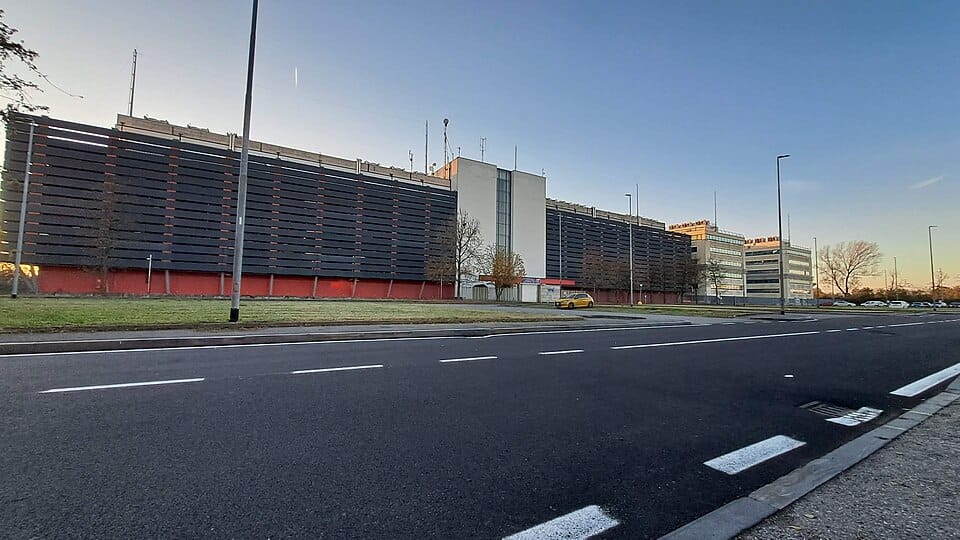
Artificial intelligence is often discussed as though it exists somewhere in the digital ether. We see chatbots, generated images and automated services appear on our screens, but rarely see the enormous industrial infrastructure operating behind them. Every AI request must be processed by physical computers housed inside data centres. Those facilities consume electricity, require cooling, draw on water supplies, connect to transmission networks and occupy land near real communities.
That physical footprint is expanding rapidly. The International Energy Agency expects global data-centre electricity consumption to roughly double by 2030, reaching about 945 terawatt-hours annually. AI is expected to be the largest source of that growth.
Australia is confronting the same challenge. Data centres consumed approximately four terawatt-hours of electricity across the National Electricity Market in 2024–25, representing about 2.2 per cent of grid demand. Under one central Australian Energy Market Operator scenario, their consumption could rise to approximately 12 terawatt-hours, or six per cent of grid-supplied electricity, by 2030.
Against that background, the Albanese government’s proposed national standards for AI and large data centres are not unnecessary bureaucracy. They are a reasonable attempt to ensure that an industry capable of producing enormous private profits does not leave households, taxpayers and the environment carrying its costs.
Technology companies should pay for the power they need
The government’s most important proposal is that large data centres would be legally required to underwrite new power supply.
Operators would also have to pay their full share of connection costs, rather than passing the cost of new transmission and distribution infrastructure onto other electricity consumers. They would be expected to reduce demand when necessary to support grid stability and avoid placing upward pressure on household energy bills. This is a basic question of fairness.
An ordinary family should not face higher electricity prices because a multinational technology company wants to build an energy-intensive AI facility nearby. Small businesses should not pay for grid upgrades primarily needed to connect a hyperscale data centre. Governments should not subsidise infrastructure while technology companies privatise the resulting profits. Requiring operators to support additional generation also helps prevent AI development from consuming renewable electricity that would otherwise have replaced coal and gas.
A company signing a contract for electricity from an existing solar or wind farm may be able to claim that its operations are powered by renewables. But unless its investment creates additional generation or storage, it may merely redirect existing clean electricity away from homes and other industries.
The Albanese proposal is stronger because it focuses on bringing new supply into the system. That could make large data centres anchor customers for new renewable-energy and storage projects, helping those projects secure finance and reach construction. Instead of AI becoming an obstacle to Australia’s energy transition, carefully designed rules could turn its enormous demand into a source of investment in that transition.
Flexibility can make the electricity grid stronger
Data centres generally require continuous and reliable power. Unmanaged, that demand could place additional strain on the grid during heatwaves, outages or periods of limited renewable generation.
The proposed standards would require large operators to build greater flexibility into their facilities and reduce their grid demand when necessary. Existing government expectations also call for peak-load management, storage, energy-efficiency measures and appropriate sharing of consumption data with energy authorities.
This could involve batteries, backup systems, scheduling some computational workloads outside periods of peak demand, or temporarily reducing non-essential processing. Not every AI workload needs to run immediately. While hospitals, telecommunications and critical services need constant availability, some model training and batch-processing tasks can be shifted to periods when renewable electricity is abundant. That is the kind of coordination Australia needs. Data centres should not simply appear on the grid as inflexible industrial loads and expect everyone else to adapt around them.
Water cannot be treated as an unlimited corporate resource
Electricity is only part of AI’s environmental footprint. Many data centres also require substantial amounts of water for cooling. That creates a particular concern in Australia, where drought, heat and water security are already significant challenges. A data centre that appears environmentally responsible when judged only by its electricity supply could still place unacceptable pressure on a community’s drinking water.
The government’s existing expectations state that operators should minimise water use, consult water utilities, communities and First Nations peoples when selecting locations, use efficient cooling technology and prioritise non-potable or recycled water where possible. Operators are also expected to report transparently on their water use and prepare for drought, disruption and climate change.
The proposed national standards would turn this general direction into a more consistent and enforceable framework. That matters because voluntary environmental promises are not enough. Communities need measurable requirements, publicly accessible reporting and consequences when operators fail to comply. A company should not be allowed to announce an abstract commitment to “water stewardship” while refusing to reveal how many litres it consumes, where that water comes from or what happens during a drought.
Ethical AI begins before an answer appears on a screen
Discussions about ethical AI often focus on whether algorithms discriminate, spread misinformation, invade privacy or eliminate jobs. Those are crucial questions, but ethics cannot stop at the software. An AI system is not genuinely ethical when its outputs are carefully moderated but the infrastructure beneath it increases electricity prices, consumes scarce water or prolongs fossil-fuel generation.
Ethical technology must consider who receives the benefits, who bears the risks and who pays for the resources it consumes. Under the government’s approach, large data centres would need to demonstrate a social licence to operate. That would include community consultation, appropriate siting, protection of personal and sensitive information, investment in Australian workers and support for local research and innovation.
The expectations also propose that major computing providers make some capacity available on favourable terms to Australian start-ups, researchers, small businesses and not-for-profit organisations. That is important because AI infrastructure should not become the exclusive property of a handful of multinational corporations. If Australian land, water, energy systems and public institutions help sustain this industry, Australians should receive more than construction disruption and vague promises about future growth.
Protecting creative work is part of responsible AI
The broader Albanese framework also connects data-centre regulation with copyright and the treatment of Australian creative work.
The government says Australian writers, artists and journalists should retain control over their work and that technology companies should not be free to use it for AI training without the creator’s control. It has rejected demands for a broad exemption that would allow companies to scrape protected material without negotiating with its owners. This strengthens the ethical case for the framework.
AI companies should not be allowed to construct profitable systems by taking electricity from the community, water from the environment and creative work from artists while paying properly for none of them. The same principle applies across each issue: innovation does not create an exemption from responsibility.
Good regulation can support investment
Opponents will inevitably argue that stronger standards could discourage data-centre investment or cause projects to move overseas.
But responsible investment requires certainty. A single national framework could replace inconsistent state and territory requirements with clearer expectations concerning energy, water, planning, safety and community consultation. The government argues that consistent rules should accelerate approval of compliant projects and make it easier to identify speculative or poorly developed proposals.
Australia does not need every proposed data centre at any price. It needs projects that strengthen the economy without weakening energy security, environmental sustainability or public trust.
Companies prepared to build additional clean generation, pay their infrastructure costs, conserve water and respect Australian law should have a clear pathway through the approval system. Those seeking cheap electricity, weak environmental conditions or unrestricted access to Australian intellectual property should not receive the same welcome. The new regulation is not about slowing down the development of technology, but it’s pro-responsibility.
The details and enforcement will matter
Supporting the government’s direction does not mean accepting every future regulation without scrutiny. The final legislation should define what qualifies as genuinely additional power generation. It should prevent companies from satisfying their obligations through questionable offsets or renewable certificates disconnected from their actual consumption.
Energy and water reporting should be public, independently audited and expressed in forms communities can understand. Standards should consider a facility’s total consumption, not only efficiency ratios that can make an enormous data centre appear sustainable because it is marginally more efficient than another enormous data centre.
Local residents and First Nations communities must have meaningful involvement before sites are approved—not consultation conducted after the essential decisions have already been made. There must also be enforceable penalties. A social licence cannot be built from press releases alone.
Australia, a pioneering nation, should shape AI rather than lag behind
AI will become an increasingly important part of healthcare, scientific research, education, accessibility, business and public services. Attempting to prevent its development altogether would be neither realistic nor desirable. But welcoming AI does not mean giving technology companies unlimited access to Australia’s resources.
The Albanese government’s proposed standards recognise that the environmental footprint of AI must be governed alongside its economic potential. They establish the sensible principle that large data centres should create the power they need, pay the infrastructure costs they cause, conserve water, work with communities and contribute something tangible to Australia.
AI should improve people’s lives, not quietly transfer environmental and financial costs from some of the world’s wealthiest corporations to ordinary households.
Requiring the industry to pay its own way will not solve every ethical concern surrounding artificial intelligence. It will, however, help establish something that has been missing from much of the global AI boom: accountability for the physical world on which the digital one depends.
References
- Prime Minister of Australia, AI in Australia’s interests, 15 July 2026.
- Department of Industry, Science and Resources, Expectations of data centres and AI infrastructure developers, 23 March 2026.
- Australian Energy Market Operator, Updated forecasting methodology targets rapidly growing electricity loads, 6 August 2025.
- International Energy Agency, Energy and AI: Energy demand from AI.
- ABC News, Anthony Albanese maps out AI future with new national framework, 14 July 2026.
- Reuters, Australia to establish government AI office, curb data centres’ water use, 15 July 2026.