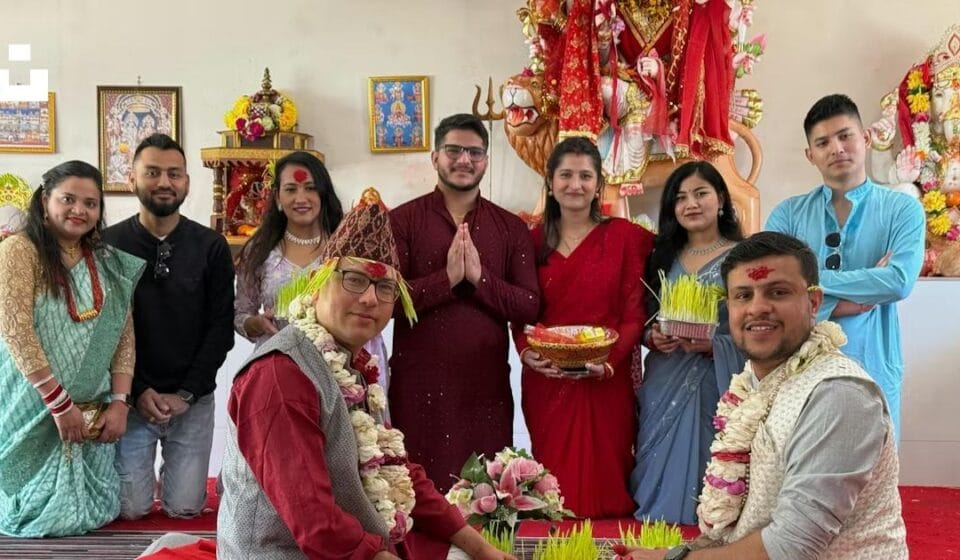
The best societies can defend equality, freedom of speech and the rule of law while remaining open to the contributions of other cultures.
The Spectator Australia has declared that “multiculturalism is a weakness”, arguing that Western societies are expected to treat every culture as equally virtuous and surrender their values to avoid causing offence. This begins with a false definition.
Multiculturalism does not mean accepting every belief, custom or ideology as equally valid. It does not require Australians to tolerate violence, coercion, antisemitism, misogyny, religious extremism or attempts to place religious authority above democratic law. It means that people from different cultural, ethnic and religious backgrounds can belong to the same country, live under the same laws and enjoy the same rights. That is not cultural surrender. It is democratic pluralism.
Acceptance does not mean agreement
Australians remain free to criticise Islam, Christianity, Judaism, Hinduism, atheism or any other worldview. They can debate immigration, religious clothing, integration and freedom of expression. But criticism of an idea is different from hostility towards the people associated with it.
Someone can oppose full-face veiling without treating every Muslim woman who wears one as dangerous. They can condemn antisemitism within a minority community without blaming everyone in that community. They can defend women’s equality while recognising that women from religious and cultural minorities are individuals capable of making their own choices.
Acceptance means recognising another person’s equal dignity even when we disagree and not demeaning them due to their differences. Looking at you, Hanson. If someone cannot live peacefully beside people who pray differently, speak another language at home or wear unfamiliar clothing, the problem is not simply political disagreement. It reflects a failure of empathy and civic maturity.
Western civilisation was built through cultural exchange
The idea that Western society must protect itself from outside influence ignores how Western civilisation developed. Western culture was shaped by Greek philosophy, Roman law, Jewish and Christian traditions, and centuries of trade and intellectual exchange with Africa, Asia and the Middle East.
During the Middle Ages, Arabic-to-Latin translations helped transmit and develop knowledge in philosophy, medicine, mathematics and natural science. Thinkers including Avicenna and Averroes influenced intellectual life in medieval Europe. Ideas have always travelled between civilisations. They have been translated, challenged, improved and passed on.
Western civilisation became stronger through that exchange, not weaker. The same process continues today. Migrants bring professional skills, languages, international relationships, artistic traditions, cuisines and different ways of approaching problems. Their children often combine these influences with Australian experiences to create something new. Multiculturalism does not merely ask Western society to tolerate difference. It gives society an opportunity to learn from it.
Australia already has shared values
Australian multiculturalism exists within parliamentary democracy, equality before the law, freedom of speech, freedom of religion and individual responsibility. No person, religion or cultural group is above Australian law. Violence does not become acceptable because it is defended as tradition. Antisemitism remains antisemitism regardless of who expresses it. Misogyny does not become acceptable because it is given a religious justification.
This is the difference between multiculturalism and cultural relativism. Multiculturalism permits diversity within a shared democratic framework. Cultural relativism, taken to an extreme, would suggest harmful conduct cannot be criticised because it belongs to another culture. Australia does not need to choose between diversity and common standards. It can have both.
Freedom of speech belongs to everyone
The Spectator’s argument suggests that freedom of speech is being compromised to avoid offending “Islamic sensibilities”. There are legitimate debates about whether institutions sometimes respond too cautiously to controversial speech. But disagreement, criticism and social consequences are not automatically censorship.
Freedom of speech means people may criticise Islam. It also means Muslims may criticise Christianity, secularism, foreign policy or the media. Jewish Australians may speak about antisemitism. Migrants may criticise aspects of Australian society, and other Australians may challenge them in return. The right cannot operate in only one direction.
Freedom of expression does not guarantee that an opinion will be admired or left unanswered. A great democracy responds to ideas with better ideas rather than treating disagreement from minorities as evidence of cultural conquest.
Other cultures enrich Australia
The phrase “host culture capitulation” portrays culture as something that must be protected from change. But cultures have never been frozen. Modern Australia includes First Nations cultures stretching back tens of thousands of years, British legal and political institutions and influences brought by successive generations of migrants.
Italian, Greek, Vietnamese, Chinese, Indian, Lebanese and many other communities did not erase Australian culture. They became part of it. Australian food, music, literature, fashion, festivals and sport have all been shaped by cultural exchange. Migrants have established businesses, conducted research, built infrastructure and strengthened Australia’s relationships with the wider world.
Different cultures can also offer valuable perspectives on family, community, education and care for older people. Not every custom should be adopted uncritically, but unfamiliar ideas should not be rejected simply because they did not originate in Europe. A mature society can retain what is valuable, reject what is harmful and remain open to what others contribute.
That is not how culture disappears. It is how culture grows.
Migrants help keep essential services running
The contribution of culturally diverse Australians is not confined to food, festivals or the arts. Migrants form a substantial part of the workforce that Australians depend upon every day. The 2021 Census found that more than 40 per cent of registered nurses and aged and disabled carers were born overseas, compared with 32 per cent across all occupations. Almost 40,000 overseas-born workers had arrived since 2016 and taken up work in those two essential occupations.
The Department of Health also reported that 8,910 overseas-trained doctors joined the Australian health workforce between July 2022 and April 2024. More than 42,000 overseas-educated doctors, nurses, midwives and other health professionals registered to practise during that period. Many internationally trained doctors work in regional and rural communities where shortages are particularly difficult to fill. These workers do not replace the need to educate, train and retain more Australian health professionals. Australia should not become dependent on recruiting workers from countries that need their own doctors and nurses.
But it is equally dishonest to portray migration as nothing more than a demand on hospitals. Migrants are also treating patients, caring for older people, staffing clinics and helping the healthcare system meet growing demand. Migrant and temporary-resident workers are also prominent in parts of the service economy. Among temporary residents counted in the 2021 Census, food and beverage services was the most common industry of employment.
Research published by the Reserve Bank of Australia found that international students made a notable contribution to labour supply in accommodation and food services, retail and healthcare. In 2023, an estimated 23.4 per cent of employed international students worked in accommodation and food services, while 13.7 per cent worked in retail and 17 per cent in healthcare. The estimates also showed that international students were proportionally more likely than the wider labour force to work in hospitality and retail.
That does not justify insecure employment, underpayment or exploitation. Migrant workers are entitled to the same wages, protections and dignity as every other worker. It does demonstrate that many restaurants, hotels, shops, care facilities and other services Australians use are supported by people who came here from elsewhere.
International students strengthen education
International students do more than provide valuable revenue to universities.
They bring different experiences and perspectives into Australian classrooms, help domestic students develop intercultural skills and build personal and professional relationships connecting Australia with the rest of the world. The Australian Government has recognised that international students enrich campuses and communities while strengthening relationships with countries throughout the Indo-Pacific and beyond.
Postgraduate international students also participate in research, contribute specialist knowledge and can become part of Australia’s future skilled workforce. The government’s international education framework recognises that postgraduate research enrolments contribute to Australia’s innovation and skilled-migration objectives. International education is also a major part of the Australian economy. In 2024–25, it generated approximately $53.6 billion, including $23.5 billion in tuition fees and $29.9 billion spent on other goods and services. Higher education accounted for about $38.8 billion of that total.
International student fees also help universities support teaching, infrastructure and research. Universities Australia says this income helps cover funding gaps and sustain research and development, although that reliance raises legitimate questions about whether governments adequately fund universities in their own right. International students should not be reduced to revenue streams, nor should unlimited growth be accepted without planning for housing and infrastructure. Numbers must be managed sustainably.
But describing these students merely as a burden ignores how they support universities, contribute to research, broaden the experiences of Australian students and sustain jobs throughout the wider economy.
Many of the world’s most liveable cities are multicultural
The claim that multiculturalism inevitably weakens Western societies is difficult to reconcile with global liveability rankings.
The Economist Intelligence Unit’s 2026 Global Liveability Index placed Copenhagen first, Vienna second, Melbourne third and Sydney fourth. Zurich, Geneva, Osaka, Adelaide, Vancouver and Tokyo completed the top ten. The index assesses 173 cities across stability, healthcare, culture and environment, education and infrastructure. Multiculturalism is not itself measured by the index, so the rankings do not prove that diversity automatically creates liveability. Strong healthcare, education, infrastructure, public safety and government all matter.
But they undermine the suggestion that cultural diversity is incompatible with prosperity, social cohesion or a strong local identity. At the beginning of 2025, 40.9 per cent of Vienna’s residents had been born abroad and 46.3 per cent had a migration background. At the 2021 Census, 49.3 per cent of Greater Melbourne residents and 52.4 per cent of Greater Sydney residents reported that both parents were born overseas. These cities have not lost their identities. Melbourne remains Australian and Vienna remains Austrian.
Multiculturalism is not the sole cause of their success, but it is part of it; immigrants often work in healthcare, education and infrastructure sectors.
Migration and multiculturalism are different debates
It is reasonable to debate whether migration is being managed sustainably. Australians can ask whether housing, transport, hospitals and schools are keeping pace with population growth. They can support lower migration without rejecting Australians born overseas.
Migration policy concerns numbers, planning and infrastructure. Multiculturalism concerns whether people who live here are treated as equal members of society. Conflating the two allows frustration about housing or public services to be redirected towards individuals who did not design government policy.
The 2025 Mapping Social Cohesion report found that 83 per cent of Australian adults believed multiculturalism had been good for Australia. It also found that 80 per cent believed immigrants were generally good for the economy, while 78 per cent believed they improved society by bringing new ideas and cultures. Even among respondents who thought immigration was too high, 71 per cent still believed multiculturalism had benefited Australia. We can debate migration numbers while respecting migrants.
Integration is a shared responsibility
Successful multiculturalism requires newcomers to understand Australian laws, democratic institutions and civic expectations. English-language education, employment and community participation should be encouraged. But integration is also the responsibility of the broader society. People cannot be expected to feel loyalty towards a country that permanently treats them as outsiders. If Australians demand integration while excluding migrants from employment, housing, politics or public life, they create the alienation they claim to fear. Integration works best when people are invited to contribute rather than ordered to erase their heritage. The goal should be a shared civic identity strong enough to include people from different backgrounds.
The real character test
It is not a character flaw to criticise a religion, oppose a cultural practice or support lower migration. The character flaw appears when criticism becomes contempt when people assume their neighbours are dangerous, inferior or incapable of belonging because of their ethnicity, clothing, accent or faith.
Living multiculturally requires patience, confidence and the ability to recognise humanity beyond familiarity. It also requires enough humility to accept that no civilisation possesses every worthwhile idea. Western society can defend freedom, democracy, equality and secular law while learning from other cultures. It can welcome new art, knowledge, food, music and perspectives without surrendering its principles.
Migrants are not merely living within Australian society. They are caring for Australians, educating them, serving them, building businesses and helping the country remain connected to the world. A weak society demands sameness because it fears difference.
A strong society knows what it stands for, applies its laws consistently and remains open to what others can contribute. If you cannot accept others or live peacefully in a multicultural country, that is not evidence that multiculturalism has failed. It may be evidence that you have failed the basic character test of living respectfully alongside your fellow Australians.
References
Hasse, Dag Nikolaus. “Influence of Arabic and Islamic Philosophy on the Latin West.” Stanford Encyclopedia of Philosophy.
Kelly, Travis. “Multiculturalism Is a Crisis of Self.” The Spectator Australia, 25 July 2026.
Australian Government Department of Home Affairs. Towards Fairness: A Multicultural Australia for All—Report of the Multicultural Framework Review, 2024.
Australian Bureau of Statistics. “Australia’s Population by Country of Birth, June 2025.”
Australian Bureau of Statistics. “15 Per Cent of Australia’s Workforce in Health Care and Social Assistance Industry,” 2022.
McCowage, Madeleine, Harry Stinson and Matthew Fink. “International Students and the Australian Economy.” Reserve Bank of Australia Bulletin, July 2025.
Australian Government Department of Education. “Education Export Income—Financial Year 2024–25.”
Economist Intelligence Unit. Global Liveability Index 2026.
City of Vienna. “Facts and Figures on Migration 2025.”
Australian Bureau of Statistics. 2021 Greater Melbourne and Greater Sydney Census QuickStats.
O’Donnell, James, et al. Mapping Social Cohesion 2025. Scanlon Foundation Research Institute.