The Iran War’s Devastating Cost: Lives, Livelihoods, Economies and the Environment
Opinion | TheWokely
Five months of conflict have killed thousands, displaced millions, destabilised energy markets and increased living costs around the world—while leaving the central security questions largely unresolved.
Wars are frequently sold as decisive solutions. Leaders promise that a short campaign will eliminate a threat, restore stability or force an opponent to surrender. The Iran war has delivered almost the opposite.
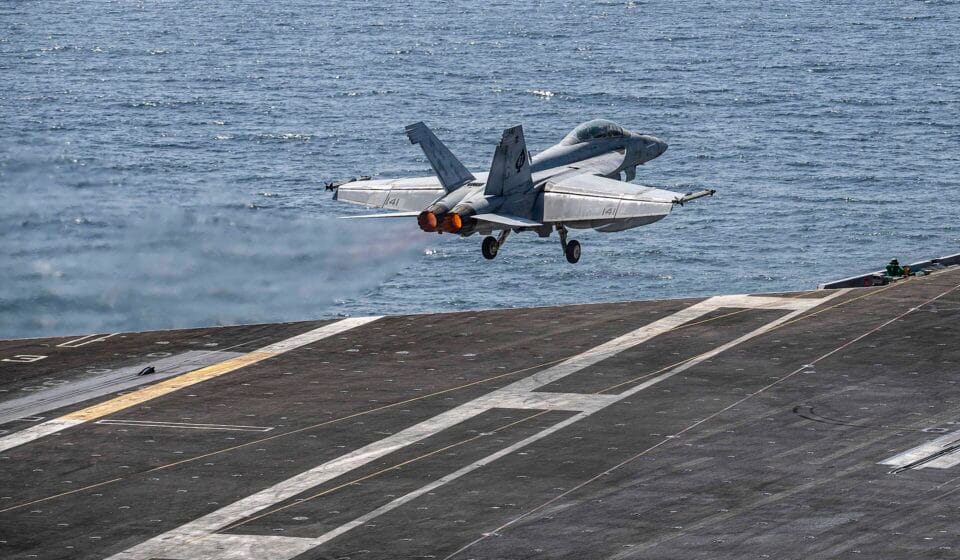
The conflict began on 28 February 2026, when the United States and Israel launched a major bombing campaign against Iran. Tehran retaliated with attacks on Israel, American forces and Gulf countries hosting US bases. More than five months later, military strikes and attacks on commercial shipping are continuing, while the parties are once again relying on mediators to negotiate over the Strait of Hormuz and Iran’s nuclear program.
This is not an argument in defence of Iran’s authoritarian government. The Iranian regime has violently repressed its own population, supported armed groups across the region and endangered civilians through attacks on shipping and neighbouring countries. But opposing the Iranian regime does not require pretending that an enormously destructive war was wise, effective or necessary.
The Iranian People have paid the highest price
By 5 August, more than 3,400 Iranians and 18 American military personnel had reportedly been killed in the conflict. The International Maritime Organization had also recorded at least 17 seafarer deaths in and around the Strait of Hormuz.
These statistics cannot convey the suffering behind them.
The United Nations refugee agency estimated in March that as many as 3.2 million people had been temporarily displaced within Iran. Millions more have been uprooted across the wider region, particularly as the conflict spread into Lebanon.
By early April, the UN reported that more than 115,000 civilian housing units in Iran had been damaged. Figures supplied by Iran’s Health Ministry and included in the UN update recorded the deaths of 216 children, 251 women and 24 health workers by that stage of the war. Airports, hospitals, schools, markets, residential neighbourhoods and industrial facilities had all reportedly been affected.
Whatever political or military objectives leaders claim to be pursuing, children killed in schools, families driven from their homes and health workers buried beneath damaged hospitals cannot be dismissed as incidental costs.
They are the reality of war.
The United States is not without loss
The United States has paid an enormous price for a war that was originally presented as something that could be resolved quickly. By 21 July, the Pentagon estimated the conflict had already cost US$37.5 billion, including projected military costs through the end of September. The administration was also seeking tens of billions of dollars more to replenish weapons and continue operations. At the same time, 18 American service members had been killed and around 430 wounded.
America has also lost something much harder to replace: military readiness. Reuters reported in August that the US had used virtually all of its available ATACMS and Precision Strike Missile stocks during the five-month conflict. Roughly 65 per cent of US Patriot interceptor stocks, 38 per cent of THAAD interceptors and almost half of the Navy’s Tomahawk cruise missiles had reportedly been consumed. These are weapons the United States may need to deter or respond to much larger threats involving Russia or China, and replenishing some stocks could take years.
The conflict has therefore imposed a strategic opportunity cost as well as a financial one. Every missile fired at Iran is a missile unavailable for another contingency, while every billion dollars needed to restore depleted arsenals is money that cannot simultaneously be spent elsewhere. Pentagon officials have themselves warned that without additional funding, maintenance, training and future military capability could come under pressure.
Perhaps most damagingly, many Americans appear unconvinced that these sacrifices have made their country safer. An August Reuters/Ipsos poll found only 35 per cent supported the war, while half of Americans expected the conflict to leave the Middle East more chaotic, compared with just 17 per cent who thought it would become more stable. The United States has spent tens of billions of dollars, lost service members and depleted strategically important weapons, yet five months into the war it is still trying to negotiate its way out of the crisis.
That is perhaps the clearest measure of the waste. America has demonstrated overwhelming military power, but military power is not the same thing as achieving a lasting political outcome.
Billions spent to return to the negotiating table
The United States Department of Defense estimated by 21 July that its direct cost from the war had reached approximately US$37.5 billion. That figure does not include every future expense associated with replacing weapons, supporting veterans, paying interest on additional borrowing or rebuilding military readiness. The material waste has been equally extraordinary.
Reuters reported that the US military had used virtually all its available long-range precision missiles during the five-month campaign. The war has also placed pressure on American stocks of Tomahawk cruise missiles and Patriot and THAAD air-defence interceptors, raising concerns about US preparedness for other conflicts and its ability to continue supporting allies such as Ukraine. Weapons that take years to manufacture have been consumed in months. Yet the central issue used to justify the war remains unresolved.
Donald Trump repeatedly described preventing Iran from developing a nuclear weapon as his primary objective. However, US intelligence assessments reported in June estimated that Iran remained less than a year away from being able to produce a weapon, the same broad timeline assessed after the 2025 strikes on Iranian nuclear facilities. Iran continues to deny that it intends to build a nuclear bomb.
Iran’s conventional military capabilities have been damaged, but its government remains in power. Its missile forces retain the ability to strike regional targets, while Tehran has demonstrated that it can disrupt one of the world’s most important shipping routes. The war has destroyed an enormous number of targets. It has not destroyed the underlying problem.
The economic damage has travelled around the world
The Strait of Hormuz normally carries roughly one-fifth of global oil and liquefied natural gas shipments. Its disruption has therefore transformed a regional conflict into an international economic shock. Saudi Aramco estimated that the war had removed approximately 2.6 billion barrels of oil from the global market by early August—close to a month of worldwide consumption. Even after shipping returns to normal, depleted inventories and strained refineries may take considerable time to recover.
The International Monetary Fund reported in June that oil prices were around 30 per cent higher than before the war. Its July outlook projected global growth of only 3 per cent in 2026 and global headline inflation of 4.7 per cent, with higher energy prices contributing to stalled progress against inflation. This means the cost is not confined to the governments firing missiles. It is being paid by workers commuting to their jobs, businesses transporting goods, farmers purchasing fertiliser and families buying food.
Australians are paying for a war they did not choose
Australia’s dependence on imported refined fuel has made it particularly exposed to the conflict. The Albanese government temporarily reduced fuel excise, initially cutting approximately 26 cents per litre from petrol and diesel prices. The government later said the excise measures would cost the federal budget about $3.3 billion.
It also announced more than $10 billion in fuel and fertiliser security measures, including a government-owned fuel reserve and financial support intended to protect supplies. These may be reasonable responses to an emergency, but they remain billions of dollars that Australia would not have needed to spend if the conflict had not disrupted global energy markets.
Treasurer Jim Chalmers has acknowledged that Australian households are facing higher fuel costs and broader inflationary pressure because of the war. Treasury has warned that the longer the conflict continues, the greater the economic danger becomes. Australia did not start this war. Nevertheless, Australian taxpayers, motorists and businesses are helping to finance its consequences.
A destructive political distraction
The conflict has also become a vast political distraction. Governments that should be concentrating on housing affordability, healthcare, climate resilience, poverty and public infrastructure have instead been forced into emergency meetings about fuel shortages, shipping security and inflation.
In the United States, the economic consequences of the conflict have increasingly overshadowed the administration’s domestic agenda. Rising fuel prices have renewed cost-of-living concerns, while billions more are being directed towards replacing weapons and sustaining military operations.
That does not mean governments can simply ignore international threats. It means leaders should recognise the opportunity cost of escalating conflicts without achievable political objectives.
Every missile launched represents resources that cannot simultaneously build housing, treat patients, strengthen public transport or help communities adapt to climate change.
Iran’s retaliation has deepened the damage
Responsibility does not rest only with Trump and the American government. Iran’s attacks on commercial vessels, Gulf infrastructure and countries hosting American forces have been reckless and indefensible. Its attempts to use the Strait of Hormuz and other shipping routes as economic leverage have inflicted hardship far beyond the governments directly involved in the conflict.
But Iranian escalation does not prove that the original bombing campaign was successful. It demonstrates how quickly wars develop their own momentum. One attack creates a justification for another. Every retaliation becomes the excuse for a larger retaliation. Political leaders become afraid that compromise will look like weakness, even as the human and economic costs continue climbing.
Meanwhile, we are all expected to absorb the consequences, especially the Iranian people.
The parties have ended up where they should have started
As of early August, Qatar and Oman were mediating efforts to restore shipping and bring the conflict to an end. American officials expressed optimism about progress, while Iranian officials disputed claims that direct negotiations were underway. The contradictory accounts demonstrate how uncertain the process remains.
Nevertheless, the parties are once again discussing shipping access, nuclear restrictions, sanctions and regional security, the same kinds of issues that ultimately require a negotiated settlement. After thousands of deaths, billions of dollars and months of economic disruption, diplomacy remains the only realistic path out.
A ceasefire should be followed by internationally monitored nuclear arrangements, guaranteed freedom of navigation, humanitarian assistance and negotiations addressing missiles, sanctions and regional security. Attacks on civilians and civilian infrastructure by every participant must also be independently investigated.
For Australia, the conflict is another warning that depending heavily on imported oil leaves households and the economy vulnerable to decisions made thousands of kilometres away. Expanding electric transport, renewable energy and domestic fuel resilience is not merely climate policy. It is national and economic security.
The Iranian government must be held accountable for its repression and aggression. But accountability is not the same thing as endless bombing.
This war has consumed lives, weapons, public money and political attention while leaving its central disputes unresolved. The sooner it ends, the sooner the world can begin repairing damage that should never have been inflicted.
The environmental damage will outlast the war
The destruction has not been limited to buildings, military equipment and economic infrastructure. The war has also created a significant environmental crisis across Iran and parts of the Persian Gulf. The United Nations Environment Programme has warned that attacks on oil facilities have produced enormous clouds of hazardous smoke, while uncontrolled fires, oil spills and munitions can contaminate air, soil, groundwater and food supplies. UNEP has also warned that some of this environmental damage could continue affecting communities long after the fighting stops.
One of the clearest examples came after oil depots and refining facilities around Tehran were struck on 7 March 2026. Satellite-based research published in Advances in Atmospheric Sciences estimated that the resulting fires released approximately 29,800 tonnes of sulphur dioxide, with the pollution plume affecting an area of roughly 300,000 square kilometres. Tehran and surrounding areas were exposed to dramatically elevated sulphur dioxide levels before winds dispersed much of the plume. The fires also contributed to the disturbing phenomenon of oily or acidic “black rain” falling over parts of the capital.
The consequences extend beyond air pollution. UNEP says contaminants from burning oil and industrial sites can settle onto land, enter rivers and groundwater and potentially be absorbed by crops. Modern weapons can also leave behind heavy metals, explosives and other toxic substances. The Persian Gulf is particularly vulnerable: damaged and sunken vessels, attacks on ports and oil infrastructure all increase the risk of petroleum and chemical contamination in a relatively shallow marine environment containing coral reefs, seagrass meadows, fisheries and other sensitive habitats. Environmental researchers have already documented oil slicks and hundreds of environmentally concerning incidents associated with the conflict.
The war has also endangered one of the region’s most precious resources: fresh water. Iran is already severely water-stressed, while much of the Gulf depends heavily on desalination. A strike on a desalination facility on Iran’s Qeshm Island reportedly interrupted water supplies to more than 25 villages, while attacks and damage to other water infrastructure elsewhere in the region have raised fears about what could happen if desalination facilities become routine military targets. Damage to these plants can threaten drinking-water supplies while also creating risks from the industrial chemicals used in desalination.
Then there is the climate cost. An early analysis by researchers associated with Queen Mary University of London, Lancaster University and the Climate and Community Institute estimated that the first 14 days alone generated more than five million tonnes of carbon-dioxide-equivalent emissions. That estimate included military operations, destroyed infrastructure and burning oil and fuel facilities. The true total after months of warfare will necessarily be higher, although a complete accounting will not be possible until considerably more data becomes available.
This makes the conflict environmentally wasteful in the most literal sense. Enormous quantities of fuel have been burned to operate aircraft, ships and military vehicles, while still more fossil fuel has been released or burned when refineries, depots and tankers have been attacked. Infrastructure that consumed huge quantities of resources and energy to construct will eventually have to be rebuilt—creating another environmental cost after the bombs stop falling.
The tragedy is that much of this damage cannot simply be repaired with a ceasefire. Buildings can eventually be reconstructed and weapons replaced, but contaminated soil, damaged marine ecosystems, polluted groundwater and long-term exposure to toxic substances can remain for years or even decades. Environmental experts interviewed by the Associated Press have warned that some of the consequences could persist for decades, particularly because environmental remediation is often pushed behind more immediate humanitarian and reconstruction needs once wars end.
The Iran war has therefore not only borrowed billions of dollars from future generations. It has also left them part of the environmental bill.
References
- Reuters (2026), US and Iran having ‘very good discussions’, Trump says.
- Reuters (2026), US has used ‘virtually all’ of its long-range precision missiles during Iran war.
- Reuters (2026), Aramco says US-Iran war has cost the global market 2.6 billion barrels of oil.
- UNHCR (2026), 3.2 million Iranians temporarily displaced as conflict intensifies.
- United Nations Iran (2026), Humanitarian Update – Islamic Republic of Iran.
- International Monetary Fund (2026), Global Economy Endures War Shock.
- Australian Government (2026), announcements on fuel excise relief and fuel security measures.
- Reuters (2026), analysis of the economic and military costs of the Iran war.
- References
- Reuters (21 July 2026), War in Iran has cost the US $37.5 billion so far, Pentagon says. Reports the Pentagon’s estimated cost, 18 US military deaths, roughly 430 injuries, and concerns about impacts on training, maintenance and future capability.
- Reuters (4 August 2026), US has used ‘virtually all’ of its long-range precision missiles during Iran war, sources say. Covers depletion of ATACMS and PrSM missiles, as well as substantial use of Patriot, THAAD and Tomahawk stocks.
- Reuters (7 August 2026), Rheinmetall says ramping up ATACMS output will take time as US rebuilds stocks. Useful for supporting the point that depleted American missile inventories could take years to rebuild.
- Reuters (6 August 2026), As Iran war drags on, Americans are bracing for more chaos in Middle East, Reuters/Ipsos poll finds. Reports 35% support for the war, while 50% expected it to make the Middle East more chaotic and only 17% expected greater stability.
- Reuters (7 August 2026), What is the Patriot missile system and why are supplies depleted worldwide? Provides additional context on depleted US Patriot stocks and the difficulties involved in rebuilding air-defence inventories.
- United Nations Environment Programme (2026), UNEP statement on environmental damage arising from the conflict in the Middle East. Yin, Z. et al. (2026), Analysis of SO₂ Emissions and Dispersion from the Fire at the Oil Storage and Refining Plant in Tehran, Iran, in March 2026, Advances in Atmospheric Sciences. United Nations/OCHA (2026), Islamic Republic of Iran: Humanitarian Update No. 01. Associated Press (2026), Iran war’s environmental toll could leave damage and health risks for decades, experts say.