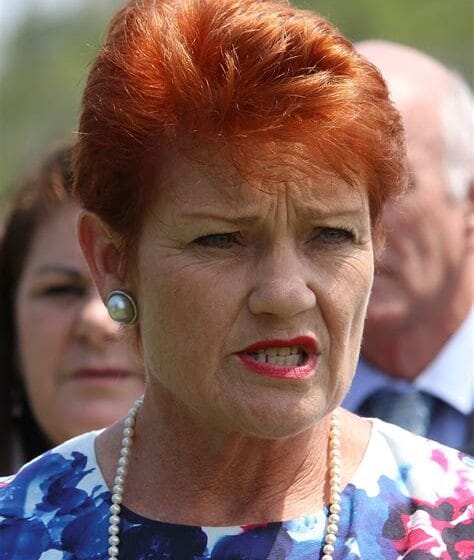
Pauline Hanson Says She Stands Up for Women. Her Words and Votes Tell a Different Story
Calling domestic violence a “two-way street” risks reinforcing the shame and self-blame that already keep victim-survivors silent.
Pauline Hanson has generated justified criticism after describing domestic violence as a “two-way street” during a Brisbane radio interview. Hanson was specifically asked what message she would give to men who hurt their intimate partners. She responded that domestic violence was wrong, “but it’s also a two-way street”. She then referred to cost-of-living pressures and other tensions facing families before telling women experiencing abuse that they should not “put up with it”. Those comments are not merely poorly chosen words. They risk reinforcing one of the most damaging messages a victim-survivor can hear: that she somehow shares responsibility for the violence inflicted upon her.
Why “two-way street” is such a dangerous description
Domestic violence is not simply an argument in which two people lose their tempers equally. According to 1800RESPECT, domestic and family violence commonly involves an ongoing pattern of behaviour through which one person frightens, controls or harms another. It can include physical violence, financial control, intimidation, surveillance, isolation, threats and psychological abuse.
Relationships can involve disagreements, poor communication and unhealthy behaviour from both people. But none of those things excuses someone choosing to use violence, intimidation or coercive control. Describing domestic violence generally as a “two-way street” blurs that distinction. It can shift attention away from the person using violence and towards the actions, personality or decisions of the person experiencing it.
That is precisely why Australia’s Sex Discrimination Commissioner, Dr Anna Cody, described any suggestion that victim-survivors share the blame as harmful and dangerous. The Australian Human Rights Commission stated plainly that domestic violence is never the responsibility of the person experiencing it and that responsibility rests with the person who chooses to use violence.
Many survivors already blame themselves
For many women, shame and self-blame are already part of the psychological burden created by abuse. Research brought together by Australia’s National Research Organisation for Women’s Safety identifies several reasons victim-survivors may not disclose violence. These include believing they are responsible for the abuse, feeling ashamed or embarrassed, fearing they will be judged, worrying they will not be believed and fearing that speaking out will make the violence worse.
Some victim-survivors may have been repeatedly told by their abuser that they provoked the violence, caused the argument or deserved what happened. Over time, those messages can damage a person’s confidence and ability to recognise that they are being abused. ANROWS notes that some women may minimise the danger or develop the belief that they “deserve the abuse” or have no right to seek help. Against that background, Pauline Hanson’s words matter and are very harmful and dangerous.
Calling domestic violence a “two-way street” risks sounding like confirmation of what an abuser may already be telling their victim: You caused this. You made me angry. You are partly responsible. That message can deepen shame, discourage disclosure and make it harder for someone to reach out for help. The violence inflicted upon a woman is not her shame to carry. She did not cause another person to use violence. She is not responsible for managing her abuser’s temper, financial stress, jealousy or behaviour. The responsibility belongs to the person who chose to harm her.
Telling women to “just leave” ignores the danger
Hanson’s suggestion that women should not “put up with” abuse might sound straightforward, but leaving a violent relationship is rarely straightforward. A victim-survivor may be facing threats against herself, her children or her pets. She may have no independent access to money, housing or transport. Her communications may be monitored, she may have been isolated from friends and family, or she may reasonably fear that attempting to leave will provoke more serious violence.
The Australian Human Rights Commission emphasised that leaving can be one of the most dangerous periods for women and children. It identified threats, financial insecurity, housing shortages, children’s wellbeing and access to specialist support as some of the barriers women must consider. ANROWS similarly identifies separation as a period of heightened danger in abusive relationships. The loss of control associated with separation can cause a perpetrator’s behaviour to escalate through stalking, harassment, surveillance and potentially lethal violence. Women should be supported to leave when they can do so as safely as possible, not judged for failing to walk out immediately.
It is also common for women to return to an abusive partner after leaving, sometimes several times before permanently separating. Australian research found that about half of women who had ended a relationship with a violent partner had separated more than once before the final separation. A woman may return because the perpetrator promises to change, because she fears further violence, or because she lacks safe housing, money, childcare and practical support. She may still love her partner, hope to preserve her family or have been isolated until she feels she has nowhere else to go. Returning does not mean the abuse was insignificant or that she accepted responsibility for it. Rather, it demonstrates how coercive control can restrict a person’s choices and how difficult and dangerous escaping abuse can be. Women who return should not be judged or abandoned; they need continued support and repeated opportunities to reach safety.
Male victims deserve support, but that does not make abuse mutually caused
Men can experience domestic violence, and male victim-survivors deserve to be believed and given appropriate support. Violence in same-sex relationships, violence against people with disabilities and violence committed by women should also be recognised. But acknowledging those victims does not require describing domestic violence as mutually caused.
Australian evidence continues to show that domestic violence is most often perpetrated by men against women, particularly when considering repeated coercive control, serious injury and intimate partner homicide. A responsible message should therefore be inclusive without becoming misleading: anyone can experience abuse, anyone can use violence, and responsibility always rests with the person committing it.
This is part of a broader record
Hanson’s latest comments do not exist in isolation.
In 2018, Hanson voted against an amendment that would have created specific federal criminal offences for sharing or threatening to share intimate images without consent. Although she had supported other measures against image-based abuse, this vote raised concerns because “revenge porn” is often used to humiliate, control and intimidate women, particularly after a relationship ends.
In 2019, she argued that a parliamentary family-law inquiry should investigate claims that women were lying about domestic violence during custody disputes. At the time, an experienced member of the NSW Domestic Violence Death Review Team told ABC Radio National that there was no evidence supporting Hanson’s broad allegation.
In December 2020, Hanson and fellow One Nation senator Malcolm Roberts voted against a Senate motion calling for domestic and family violence services to be funded. Hanson argued during the debate that domestic violence did not discriminate between men and women, while the recorded division shows both One Nation senators voting against the motion.
More recently, Hanson questioned why businesses should pay women who were away from work after having children. She later clarified that she would not abolish Australia’s government-funded paid parental leave scheme, but the episode again raised concerns about her understanding of policies designed to protect women’s economic participation and security.
One Nation’s official policy also states that the party will seek opportunities to roll back existing abortion laws, placing it in direct conflict with advocates of women’s reproductive autonomy.
No single statement or parliamentary vote tells the entire story of a politician. But when these comments, policy positions and votes are considered together, women have legitimate reasons to question whether Hanson and One Nation will protect their safety, equality and independence.
Women deserve better leadership
Leadership on domestic violence requires empathy, accuracy and an understanding of how abuse operates.
It requires leaders to remove shame from victim-survivors, not reinforce it.
It requires keeping attention on the behaviour of perpetrators, not asking what their victims did to contribute to the violence.
And it requires recognising that leaving an abusive relationship often demands careful safety planning, financial assistance, secure housing, legal protection and ongoing specialist support.
Calling domestic violence a “two-way street” fails that test.
Women experiencing violence are not responsible for what has been inflicted upon them. They should be believed, supported and treated with dignity.
Words matter. Votes matter. Women deserve political leaders who understand both.
Support is available: Anyone experiencing domestic, family or sexual violence can contact 1800RESPECT on 1800 737 732, text 0458 737 732, or access its online support services 24 hours a day. Call 000 when someone is in immediate danger.
References
- ABC News. “Hanson labels domestic violence ‘two-way street’.” 22 July 2026. Reports Pauline Hanson’s comments that domestic violence is a “two-way street” and that women should not “put up with it.”
- Australian Human Rights Commission. “Commissioners reject Senator Hanson’s domestic violence comments.” July 2026. Explains why suggesting that victim-survivors share responsibility is dangerous and why leaving an abusive relationship can be a period of heightened risk.
- 1800RESPECT. “Domestic and family violence.” Explains that domestic violence usually involves an ongoing pattern of threatening, controlling or coercive behaviour, rather than simply a mutual disagreement.
- 1800RESPECT. “Coercive control.” Explains how repeated abuse can damage a victim-survivor’s confidence and self-esteem, making it more difficult to leave or seek assistance.
- Australia’s National Research Organisation for Women’s Safety — ANROWS. “National Risk Assessment Principles for Domestic and Family Violence: Companion Resource.” Identifies shame, self-blame, fear of retaliation, fear of judgement and concern about not being believed as barriers to disclosing abuse or seeking help. It also discusses the increased danger associated with attempts to leave.
- ANROWS. “Attitudes matter: Overall Australians’ attitudes towards violence against women have improved, but there is still a long way to go.” 29 March 2023. Reports that one in four surveyed Australians believed a woman who did not leave an abusive partner was partly responsible for the abuse continuing, illustrating the persistence of victim-blaming attitudes.
- ANROWS. “Violence against women in Australia: Additional analysis of the Australian Bureau of Statistics Personal Safety Survey 2012.” Reports that half of women who had left their most recently violent former male cohabiting partner had temporarily separated at least once before the final separation. It also explains common reasons women returned, including promises that the abuse would stop, commitment to the relationship and concern for children.
- ANROWS. “Acting on what we know: Prevention, post-separation risk and the responsibility to respond.” Explains that danger does not necessarily end when a relationship ends and that separation can trigger escalating coercive control, surveillance, harassment or violence.
- Australian Institute of Health and Welfare. “Factors associated with family, domestic and sexual violence.” Explains that violence can affect anyone but that most people experiencing family, domestic and sexual violence are women, with gender inequality recognised as an underlying driver.
- ABC News. “Family law inquiry given green light by Senate as Rosie Batty warns Pauline Hanson will bias investigation.” 18 September 2019. Covers Hanson’s allegations that women were making up or exaggerating domestic-violence claims in family-law disputes and the concerns raised by violence-prevention advocates.
- They Vote For You. “Senate Motions — Domestic and Family Violence — Fund services.” 9 December 2020. Records Pauline Hanson and Malcolm Roberts voting against a motion calling for domestic and family violence services to be properly funded.
- ABC News. “Pauline Hanson’s views on paid parental leave criticised as outdated.” 19 June 2026. Reports Hanson questioning why businesses should pay women who were not working after having children and indicating that One Nation was willing to consider reducing parental-leave entitlements.
- ABC News. “Pauline Hanson says she supports paid parental leave after comments spark backlash.” 23 June 2026. Records Hanson’s subsequent clarification that she supported taxpayer-funded parental leave while opposing requirements that would place the cost directly on businesses.
- Pauline Hanson’s One Nation. “Pro-Life.” The party’s official policy states that it will seek opportunities to roll back existing abortion laws.
- They Vote For You. “Enhancing Online Safety (Non-Consensual Sharing of Intimate Images) Bill 2017 — Criminal offences.” 14 February 2018. Records Hanson voting against an amendment creating specific Commonwealth criminal offences for producing, sharing or threatening to share intimate images without consent. The amendment nevertheless passed by 34 votes to 30.
- eSafety Commissioner. “Image-based abuse.” Provides information about the sharing or threatened sharing of intimate images without consent, commonly known as image-based abuse or “revenge porn,” and the assistance available to victim-survivors.
- eSafety Commissioner. “Insights from eSafety’s image-based abuse reporting and removal scheme.” Provides research about complaints involving the non-consensual sharing or threatened sharing of intimate material and the experiences of people targeted by this abuse.
- 1800RESPECT. National domestic, family and sexual violence support service. Available 24 hours a day by telephone on 1800 737 732, text on 0458 737 732, online chat and video call. Call 000 when someone is in immediate danger.