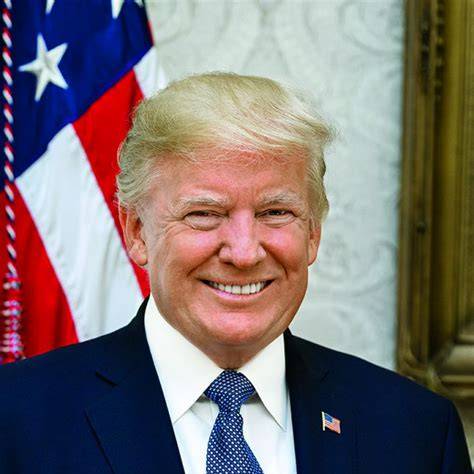
When Vibes Trump Policy, Hanson and other populist leaders get the Upper Hand
Populist leaders often win support by making voters feel seen, angry and aggrieved, even when their policies are vague, contradictory and are highly unlikely to solve the problems they describe, instead often making them worse.
Politics is supposed to involve choices about housing, wages, healthcare, taxation and public services. Yet elections are rarely decided by detailed policy comparisons. Most people do not have time to read legislation, costings and parliamentary voting records. Instead, voters often rely on impressions: Does this leader seem strong? Do they understand people like me? Are they willing to say what others will not?
Populist leaders are particularly skilled at turning those impressions into political loyalty. They do not simply present themselves as champions of people who feel mistreated by the system. They often portray themselves as victims of that same system—attacked by the media, silenced by elites or unfairly targeted by powerful institutions.
This allows the leader to appear more relatable. Their supporters’ frustrations become the leader’s frustrations, while every criticism can be reframed as proof that the establishment fears them. They do not simply sell policies. They sell a shared feeling of grievance.
Making voters feel seen
Populists usually present politics as a struggle between “ordinary people” and a corrupt or disconnected elite.
Their message is simple:
You have been ignored.
The system is working against you.
It is working against me too.
I am the only person willing to fight for us.
This can be powerful because the frustration behind it is often genuine. Housing is unaffordable, wages are under pressure, public services are struggling and many people believe political institutions no longer listen to them. By presenting themselves as another victim of the system, populist leaders narrow the emotional distance between themselves and their supporters. A wealthy, powerful or long-serving politician can still appear to be an ordinary outsider who is supposedly being punished for speaking uncomfortable truths.
Criticism from journalists, courts, experts or political opponents can then strengthen the relationship. Instead of encouraging supporters to examine whether the criticism is valid, the leader presents it as an attack on everyone who supports them. The problem begins when real concerns are transformed into an overly simple story with convenient villains.
Housing shortages involve planning laws, infrastructure, construction costs, interest rates, taxation and years of government decisions. A populist can reduce all of that to: immigrants took your house. Cost-of-living pressures involve wages, energy prices, competition, supply chains and housing costs. A populist can reduce all of that to: the elites are stealing from you. A villain is easier to sell than a serious policy.
When emotion blinds wisdom
In Australia, Pauline Hanson has built a long-running political identity around saying what supposedly cannot be said and standing up for people who feel ignored by the political establishment. Her appeal often depends less on whether a proposal is workable and more on whether supporters believe she is speaking honestly on their behalf. Criticism can be incorporated into that identity: attempts to challenge her statements may be presented as proof that political and media elites are trying to silence both Hanson and the Australians she claims to represent.
The contradiction is that someone can spend decades in national politics while continuing to present themselves as an outsider and victim of the political system. But once the combined emotional sentiment is established, political experience does not necessarily weaken it. Instead, every controversy can reinforce the story: Hanson is attacked because she is willing to say what others are supposedly too afraid to say.
Donald Trump provides an even clearer international example. His political positions have shifted on trade, government spending, foreign policy and social programs, yet his personal following has remained remarkably strong. A central part of Trump’s appeal is his portrayal of himself as a victim of hostile institutions, political opponents and media organisations. He presents attacks on himself as attacks on his supporters, repeatedly encouraging them to believe that he is being targeted because he stands between them and a corrupt establishment.
This transforms personal grievance into collective grievance. Defending the leader becomes a way for supporters to defend themselves and not think critically about what their leader is doing. For many supporters, loyalty to Trump comes before attachment to a consistent set of policies. A proposal may be rejected when it comes from an opponent but accepted when Trump endorses it. The leader does not merely represent the movement. The leader represents the movement and must be protected at all times, even when it goes against our best judgment, often leaving us worse off.
Slogans hide difficult trade-offs
The Brexit slogan “Take Back Control” was politically effective because it compressed complicated questions about trade, immigration, sovereignty and regulation into three memorable words. The slogan offered a feeling of national control without requiring agreement about what Brexit would look like in practice.
It also reinforced a broader story of victimhood: Britain had supposedly been weakened, constrained or mistreated by distant institutions, and leaving the European Union would restore what had been taken away.
But governing cannot remain at the level of slogans. Trade-offs eventually appear through border delays, regulatory disputes, labour shortages and economic costs.
The same pattern appears whenever a politician promises to stop immigration, cut taxes, increase spending and reduce debt without explaining how those goals fit together. A campaign can survive on contradictions. A government cannot avoid their consequences forever.
Social media rewards outrage and victimhood
Modern political communication makes vibe-based politics even more effective.
Detailed explanations are slow and qualified. Anger, fear, humiliation and outrage are immediate. They produce reactions, comments and shares. A politician who says, “This problem has several causes and will require gradual reform,” is competing against someone saying, “They did this to you, they are doing it to me, and only I can stop them.” The second message is easier to remember and better suited to social media.
Claims of censorship, persecution or unfair treatment are especially effective because they allow populist leaders to turn almost any negative attention into useful content. Being criticised becomes evidence of courage. Being fact-checked becomes evidence of censorship. Being held accountable becomes evidence that the establishment is afraid.
This does not mean every emotional argument is dishonest or that powerful institutions never behave unfairly. Politics has always involved hope, fear, pride and anger. The danger arises when emotional identification replaces scrutiny. Once politics becomes a battle between “us” and “them,” questioning the leader can feel like betraying the group.
What happens when the promises fail?
Vibe-based politics can provide emotional satisfaction without producing material improvement. Research across different countries has associated populist governments with weaker economic outcomes, protectionism, unsustainable spending and the erosion of political institutions. That does not mean every populist government performs badly or that traditional parties always govern well.
It does mean that anti-establishment branding should not be confused with competence. Populist leaders can also protect themselves from failure by redirecting blame. When promised improvements do not arrive, the problem is said to be judges, journalists, public servants, foreign governments, minorities or disloyal members of the movement. The leader may then present themselves as having been prevented from succeeding by the same forces supposedly oppressing their supporters.
Failure does not weaken the victimhood narrative. It can strengthen it. The failure of the policy becomes further proof that the conspiracy was real.
Populist voters are not stupid
Criticising populism should not become an excuse to insult the people attracted to it. Many voters have experienced genuine neglect. Regional communities have lost services and industries. Younger Australians feel locked out of home ownership. Workers have watched corporate profits grow while their own security has weakened.
Established political parties often helped create the conditions in which populism thrives. Telling frustrated voters that they are ignorant or irrational will not rebuild trust. A better response is to acknowledge the grievance while challenging the false explanation.
Yes, housing is too expensive, but blaming migrants will not train more builders, reform planning systems or construct new homes.
Yes, powerful institutions should be challenged, but giving unchecked power to one personality will not make government more accountable.
Yes, elites can become disconnected and often are part of the problem, but a wealthy or long-serving politician does not become an ordinary victim simply because they describe themselves as one.
Feeling persecuted does not prove that a leader is right. Sometimes criticism is not censorship, accountability is not oppression and losing an argument is not evidence of a conspiracy. We should never muddy the truth just because of our feelings.
Looking beyond the vibe
Character and communication matter. Voters should care whether a leader appears empathetic, trustworthy and capable.
But those impressions should begin the evaluation, not end it.
The most useful questions are simple:
What is the actual policy?
Who benefits, who pays and what are the trade-offs?
What has the politician achieved when given power?
Is the leader genuinely being treated unfairly, or are they using accountability to reinforce their victimhood narrative?
Would their supporters accept the same behaviour from the opposing side?
A leader may make people feel heard while still offering policies that leave them worse off.
Democracy works best when politicians are treated as representatives rather than saviours—or fellow victims whose every problem must be blamed on a hostile system.
A powerful speech can make people feel stronger for an evening.
The policy still has to work the next morning.
Image credit: Composite by TheWokely. Pauline Hanson photograph by Jfish92, CC0/Wikimedia Commons; Donald Trump photograph by Daniel Torok, public domain/Wikimedia Commons.