Nearly six months into the US–Iran war, diplomacy is failing, shipping remains heavily disrupted and Donald Trump is now speaking as though a vital international waterway belongs to the United States.
Updated: 22 August 2026
When The Wokely previously examined the Iran war, we warned that its cost would not stop at military targets. It would be measured in civilian lives, damaged economies, higher household bills, environmental destruction and a Middle East pushed deeper into instability.
Nearly six months since the start of the war, that warning looks increasingly grim.
The Strait of Hormuz remains heavily disrupted. Ships and seafarers have been attacked, oil markets remain unsettled and the diplomatic agreement reached in June has fallen apart. Instead of offering a credible way out, US President Donald Trump is now describing the strait as effectively American territory and threatening Oman for attempting to negotiate with Iran.
Iran’s efforts to restrict international shipping deserve condemnation. But claiming ownership of another region’s waters and threatening to bomb a country trying to mediate is not a defence of international law. It is escalation dressed up as strength.
What has happened to the peace agreement?
The United States and Iran signed a memorandum of understanding on 17 June. It called for an end to military operations and allowed up to 60 days to negotiate a more permanent agreement covering Iran’s nuclear program, sanctions and the reopening of the Strait of Hormuz. It did not last.
Trump declared the agreement “over” on 7 July. Iran formally suspended it a week later. The 60-day negotiating period expired on 17 August without a replacement agreement.
Iran now says it will not fully reopen the strait until the United States lifts its blockade of Iranian ports, removes oil sanctions, releases frozen Iranian assets and ends military operations and threats. Washington has rejected those demands and is preparing what Trump has called an “Economic D-Day” against Iran.
Meanwhile, commercial shipping has slowed to a trickle. Before the war, more than 130 ships reportedly passed through the strait each day. During parts of August, that number fell to only a handful.
This is not a functioning peace. It is a dangerous pause between rounds of escalation.
Why are Iran and Oman negotiating over the strait?
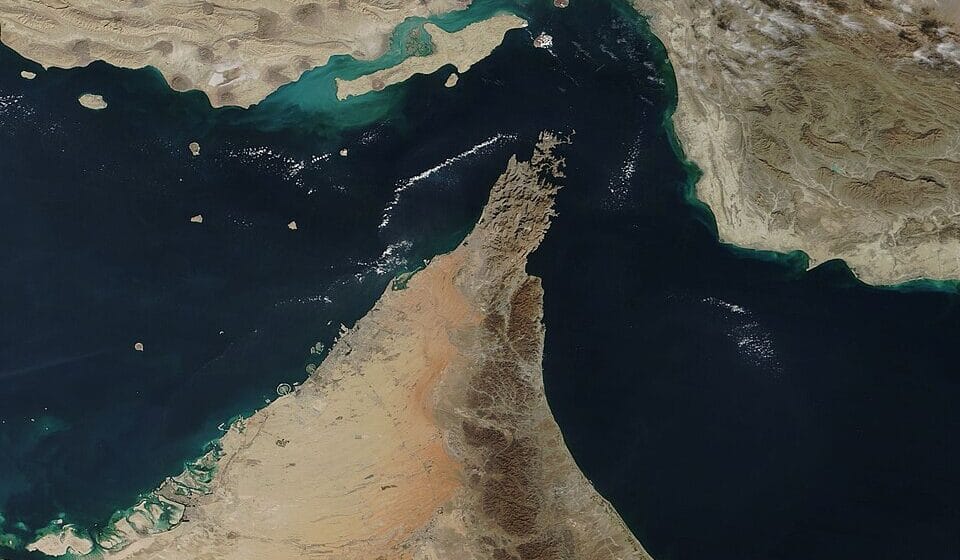
The Strait of Hormuz lies between Iran and Oman. Both are coastal states with sovereign rights over their respective territorial waters, while international law also protects the right of transit passage for ships travelling through an international strait.
Oman and Iran have been negotiating new shipping routes and arrangements intended to restore safer commercial navigation. In a joint statement issued in June, both countries said the strait should remain secure and open while respecting international law and the sovereignty of its coastal states.
The talks reportedly considered which routes ships would use, how they would be administered and whether fees could be charged for services. Some proposed terms have understandably concerned Washington, particularly suggestions that Iran could control inbound traffic or exclude ships connected to countries it considers hostile.
Those concerns should be negotiated. Iran must not be permitted to attack civilian vessels, discriminate between lawful commercial traffic or hold global energy supplies hostage.
But Oman’s attempt to negotiate a solution is not an attack on the United States. Oman has been a longstanding US strategic partner and one of the region’s most useful diplomatic intermediaries. It has repeatedly provided a channel for negotiations when Washington and Tehran could not speak directly.
Threatening that mediator is reckless.
Trump’s threat to bomb Oman
On 17 August, Trump told a Fox News reporter:
“If Oman gets in the way, we’ll bomb the shit out of them.”
When questioned later, Trump said Oman had not “behaved very well” and claimed the United States could handle the country “very easily”. The remarks were reported by both Reuters and the Associated Press.
As of publication, Trump’s words remain a threat rather than an announced military operation. There is no public evidence that the United States has ordered or carried out strikes against Oman.
That distinction matters, but it does not make the threat acceptable.
Oman and the United States have maintained diplomatic relations for more than 180 years. They cooperate on security, trade and regional stability. Threatening to bomb such a partner because it is conducting negotiations with its neighbour sends a chilling message: diplomacy is tolerated only when it delivers exactly what Washington wants.
It also damages US credibility. Why would another country take the risk of mediating a future conflict if it might be threatened for producing an imperfect compromise?
The Strait of Hormuz is not American territory
Trump has repeatedly claimed the United States has “total control” of the strait. On 21 August, he went further:
“If Oman gets in the way, we’ll bomb the shit out of them.”
It is not.
The strait is located between Iran and Oman. The United Nations Convention on the Law of the Sea protects transit passage through straits used for international navigation, while recognising the sovereignty of coastal states over their territorial waters.
A right to defend freedom of navigation does not create a right of ownership.
Nor does military power transfer sovereignty. A president cannot annex an international waterway by announcing that his country controls it. If Iran cannot lawfully claim exclusive ownership of the strait, neither can the United States.
Trump’s language also undermines Washington’s stated argument that it is defending a shared international passage. Freedom of navigation means keeping the waterway open under common rules. It does not mean replacing Iranian domination with American domination.
Iran is not an innocent party
Criticism of Trump does not excuse Iran’s conduct.
Iran has attacked or obstructed shipping, attempted to use the strait as leverage and threatened neighbouring Gulf states. It has reportedly resumed attacks on ships it accuses of using unauthorised routes. The United Arab Emirates has blamed Iran for attacks on Emirati vessels, although Tehran has disputed some regional accusations.
The International Maritime Organization had recorded 68 confirmed maritime incidents and 19 seafarer deaths across the affected region by 21 August. Around 20,000 seafarers, port workers and offshore personnel have been affected.
These people are not pieces on a geopolitical chessboard. They are workers trying to move food, fuel and other goods through one of the world’s most dangerous shipping corridors.
Both Iran’s attacks and Trump’s threats make their lives more dangerous.
The rest of the region is being pulled in
The danger extends beyond Iran and Oman.
The United Arab Emirates has reported missiles and attacks on vessels. Iran-backed Houthi forces have intensified threats against Saudi Arabia and shipping near the Red Sea. Fighting and economic damage continue in Lebanon, while Gaza’s humanitarian emergency and rising violence in the West Bank have not disappeared.
The Iran war has not replaced these crises. It has been layered on top of them.
Countries are now being pushed to choose sides, expand military preparations and harden their borders and financial systems. NATO members have discussed possible contributions to protect navigation through Hormuz, although Reuters reports that this would not be an official NATO mission.
Every additional warship, missile alert and retaliatory threat creates another opportunity for a mistake to become a much wider war.
Australians are paying for this too
The Strait of Hormuz carried roughly one-fifth of global oil and liquefied natural gas trade before the war. Most of those energy shipments were destined for Asian markets.
That makes Australia particularly exposed to higher oil prices, shipping costs and regional supply disruption. Even fuel not purchased directly from the Gulf is priced through international markets. Diesel costs feed into farming, mining, transport, construction and the price of food on supermarket shelves.
Earlier this year, the Australian Government was forced to introduce fuel-security measures, temporarily reduce fuel excise and secure additional diesel and jet-fuel supplies. Its fuel-security response is an admission of how quickly a distant war can reach Australian households.
The crisis also strengthens the case for reducing Australia’s dependence on imported oil. Electric transport, renewable energy, stronger public transport and domestic fuel resilience are not just climate policies. They are protection against foreign wars and unstable oil markets.
War has not delivered security
After nearly six months, no side can honestly claim that this war has produced lasting security.
Iran has suffered devastating military and economic damage, yet it retains enough missiles and maritime capability to disrupt the strait. The United States can maintain a naval blockade, but it has not forced Iran into an enduring settlement. Regional states remain exposed, commercial shipping remains hazardous and ordinary families are paying more for basic goods.
Now Washington is turning back to sweeping sanctions while Trump threatens Oman and speaks as if the strait is a US possession.
That is not a strategy for peace. It is an attempt to dominate a crisis that military force has already failed to resolve.
Iran must stop attacking civilian shipping and using the Strait of Hormuz as a bargaining weapon. The United States must abandon threats against Oman and stop treating sovereignty as something powerful countries can simply claim. All parties must return to negotiations with enforceable guarantees for nuclear inspections, sanctions relief, regional security and genuinely free passage through the strait.
Strength is not measured by how many countries a leader can threaten to bomb. It is measured by whether they can prevent another generation from having to live with the consequences.
References
- Reuters: Trump threatens to bomb Oman
- Associated Press: Oman, Iran and the Strait of Hormuz dispute
- Reuters: Strait to remain restricted as the interim agreement collapses
- Reuters: Shipping traffic slows amid attacks and threats
- Omani Foreign Ministry: Oman–Iran joint statement
- United Nations: Transit passage through international straits
- International Maritime Organization: Confirmed maritime incidents
- US Energy Information Administration: Importance of the Strait of Hormuz
- Australian Government: Securing Australia’s fuel supply